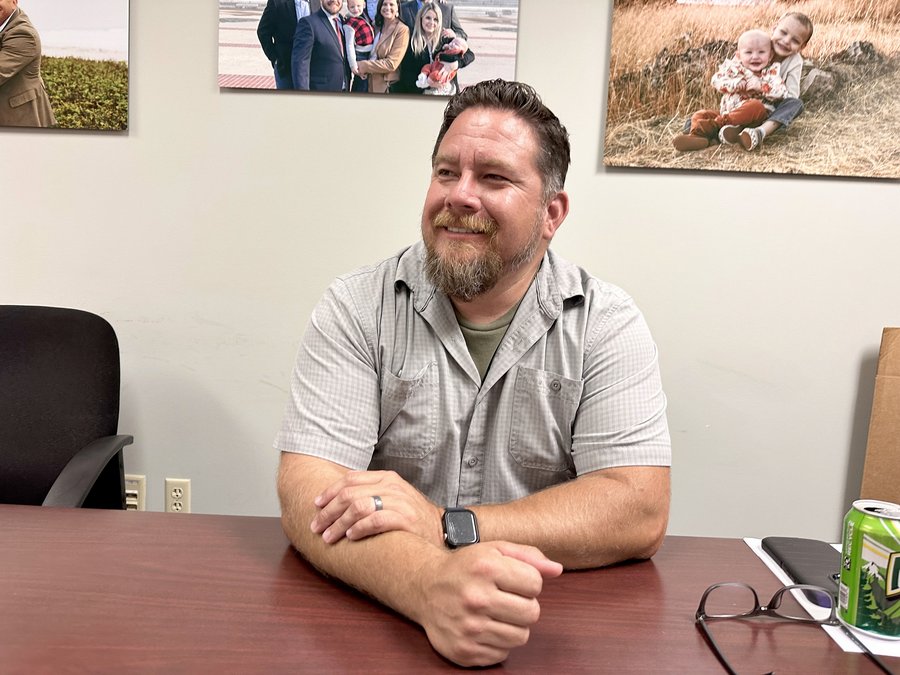
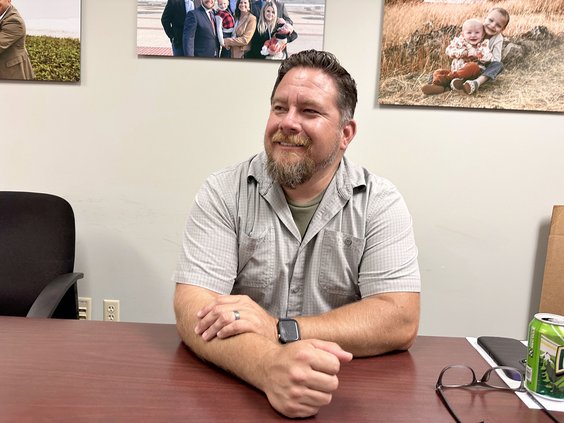
(Editor's note: This the second part of our Oct.20, 2025 question and answer session with state Assemblyman Juan Alanis conducted in his Modesto office.)
Q: Are you making any endorsements to the governor’s race?
A: I did last year, Chad Bianco. This was before he was just getting his ducks in line basically. So I figured, hey, if it works to get a retired cop up there in the Legislature, what would it be like to get another law enforcement officer as governor?
Q: With Republican Steve Hilton in the race, how does that affect his chances?
A: It’ll obviously split the votes. I’m new to politics but I see that when we put a bunch of one party in, they tend to split all the votes.
Q: Do you think we’ll end up with two Democrats in the top two?
A: Probably.
Q: What are your feelings about CEQA (California Environmental Quality Act)?
A: CEQA has its place. I would say for the (digester) project that we saw today CEQA is what it’s meant for to be part of that, but a lot of it’s being applied to like the smallest thing to even like building our houses. I don’t think it has a place there. We should go to local zoning stuff.
Q: We watched the Walmart Supercenter in Ceres delayed for 14 years based on CEQA. They use it as a weapon.
A: They do. And for some reasons, they also get to have it waived. Like the Golden One Center. Or even about the Capitol Annex. Just keep building, build, build, build, build. Do it across the board.
I know during a state of emergency we got a lot of stuff done, like when we had the floods down here last year. I wish we would just stay in that lane and go ahead and just build a dam under a state of emergency.
Q: Talk to me about your district. What counties do you cover?
A: We only cover Stanislaus and Merced.
Q: That’s an easy district to cover then, unlike Marie Alvarado Gill’s Senate district.
A: She has 13 counties. So even like Assemblywoman Heather Hadwick up north, she has 11 counties. So I have a fairly good as far as only having to worry about Stanislaus and just a little northern sliver of Merced. So like Hilmar, Stevenson, Snelling, Gustine and Ballico.
Q: Have you ever thought about inviting some of these urban legislators to your counties and say, “Hey, take a look around, see what the farmers are dealing with.”
A: We talked about it today. So with me being vice chair on Ag, and even Natural Resources, I’m big on tours. The chair of Natural Resources, Isaac Bryan from Los Angeles, grew up around concrete. Hadwick got him to go on a tour in Shasta and go see the redwoods and see the value in forest management, where we’re getting rid of the younger trees and letting the older ones get bigger so they can survive fires. And he’s written like three bills already on forest because he had no idea. And it’s, dude, you represent the whole state, especially being a chair of a committee that has to do with all of it. You should be part of it.
With ag in mind, I was down south touring a geothermal power plant at the Salton Sea and as we were driving by a field of hundreds of cows, my colleagues were like, “Oh, look, it’s a dairy.” Well, they had it right with black and whites – they were Holsteins – but I told them, “Guys, there’s no tanks, there’s no milk barn, and most importantly there’s no utters.” Those of us in ag know you gotta have utters for dairy. I’m like, “No, that’s a feed lot. Those are going to become your Whoppers or your McDonald’s hamburgers.” They don’t get it; they don’t have that full grasp so anytime we can get them to do a tour here we try. We usually have to do it in the Sacramento area because they won’t travel that far.
I need to let them see what we have here because I always tell them, “Stop making my district Los Angeles.” A lot of the lot of the legislation that we have – especially that’s bad – comes out of L.A. They don’t hold their city councilmembers accountable, they don’t hold their board of supervisors accountable. Like, “Oh, you know what? I can’t hold you accountable so I’m just gonna go make it a state law.” Now it applies to all of us.
Q: What was that recent bill Newsom signed that affects Glock handguns?
A: It outlaws the sales of Glocks as of next year because the ability to have the switch. It’s just something you can add inside so when you pull the trigger, it makes it go (he makes the sound of a machine gun). So their argument was that this mechanism will make it an automatic weapon. Well, you can do that with pretty much any gun if you just go get the right things; you just got to go to another state or know what you’re doing here. They are going after Glocks, which is like one of the most popular guns.
Q: What about any other handgun, like my Springfield 9mm?
A: That’ll probably be next on the list. They’ll come and do that. So basically, it’ll be like, “I got this one in now let’s go after the others.” But then it’ll get held up in court, and then it’ll get found unconstitutional. We’ll have it back but now we have to go through all that again and spend money on that. That’s a waste.
Q: It just seems like when you when you talk about a lot of the problems California has, it’s because they are so environmentally conscience, like the fight against “Big Oil.” Now we have, what, two refineries left in California?
A: Well, we have two refineries going down. We still have five, I believe.
Q: Five left, but that’s going to affect the supply, which is going to affect the price. So, do you think it’ll ever get up to $6 per gallon?
A: Oh, I hear it’s going to go to $10, maybe in a couple years. So I even have environmentalists now that are trying to keep those refineries open.
Q: And what happens when gas gets that high? Do people finally start waking up because they’re not going to be able to afford it?
A: That’s when (politicians) can say, “Here, now get this electric car.” That’s what they’re doing. They’re trying to get the cars out so that you’re more reliable on what they’re going to provide.
So the other thing is, like with the pipelines. Right now, we’re pumping oil through, like Kern (County) through these pipelines, which is the safest and cheapest way to get the oil through. It’s just simple plumbing – if you don’t keep it flowing through and keeping it warm, it’ll slow down and cool down and it’ll clog. So now their supply is running low, and so the pressure also is not happening. So then they’re going to have to stop that, start trucking it, which then we’ll take the price up also. There’s a lot of factors involved with that. But like I said, environmentalists were even like trying to bring refineries back and I asked them, “Why are you onboard now?” “Because we don’t want to pay $10 a gallon on either, Juan.”
Q: Well then the trucks transporting oil on the freeways is creating more emissions.
A: And that’s another part. They’d rather see the pipe than the trucking. So for them, it’s the lesser of the two evils. For me, I think it just makes sense.
And then environmental justice groups talk about forest management but they’d rather truck (timber) in from Canada or Oregon again coming up on train, which also pollutes. What do you care about?
Q: So what legislation that you’ve authored are you proudest of?
A: I’m real proud of the first one we got done, which was Nevaeh Youth Sports Safety Act, with the 10-year-old in Waterford. We’ve gotten pushback. We had another bill on the same thing working on safety plans, making sure trainings happen, making sure that maintenance is done on the ADs (automatic defibrillators). Even though the ADs were already law and will come into place in a couple years, you have a lot of these small Pop Warner, soccers saying, “We can’t afford it.” I had one lady came up and testified on this new bill, just talking about training, saying that she couldn’t afford the ADs yet she has 92,000 athletes. And I was like, 92,000? You collect like an extra 10 cents from every player, maybe five cents, and you pay for your AD.
When we were doing the AD bill – not that I’m saying thankful what happened – NFL football player Damar Hamlin had a heart attack on the field and people got to see it on TV and I got to talk about that at the time when I was presenting the bill. Everybody saw the value in having an AD on the field so why are we not doing this for our kids? And obviously that helped.
We know that heart attacks are one of the leading deaths as far as it goes with sports, because kids now are starting to have heart attacks. All heart related issues.
ADs, at the time, were already on school campuses, like in Waterford it was just unfortunate it was locked up because they didn’t by law have to provide it.
Some legislation that we’re trying right now, as you know my background with being a Crimes Against Children detective, when you have a case involving child pornography, the detective has it. Some nasty stuff happened here, and now I have a defense attorney that says, “Your Honor, I want to get this evidence in discovery.” So now I have to make a copy of this, basically victimizing my victim again by giving them a copy.
One of our Crimes against Children detectives called me, just having a bad day. He said, “Juan, like in the last four months I’ve had to make three copies and it’s just frustrating. Juan, there’s a federal law that says that we don’t have to.” But we’re not under federal law and so we wrote it up and submitted AB 528.
If you want to see it, attorney, you come to the police department, you watch it. You can take your notes or whatever, but we are not making another copy. And so, it got through the Assembly with no “no” votes but went to the Senate then we started having some problems. Appropriations Committee is where usually things get held up. They usually put a price tag on bills.
Two years ago I was adding child abduction to a law that was going to cost, I think it was $20,000 or maybe it was $200,000. That’s a lot of money just to add two words to that law to give the judge the ability to say, “Nope, we’re not making a copy of it; you can go down to the police department and watch it.” But now, if we took the Judiciary (Committee) discretion in it, they wouldn’t have a price-tag on it. So that’s their way of stopping bills.
I’m not done with that one. Thankfully, I have a lot of Democrat friends who are soccer moms. So it’s sitting on a shelf, waiting for me to come back in January to try and resurrect it in a sense, do some negotiating to find out when why is it cost so much. And then gives me time to also go talk with my colleagues.
Q: When does the Assembly meet?
A: Mondays and Thursdays we’re on the floor. So we’re out of session right now. We go back in January until July. And then we take a month off and then we go back for one more month, August, and then we’re done for the rest of year. It staggers depending on election years.
We’re full time. So, like right now, I’m working; I’m just not in Sacramento. So, I’m doing tours. We’re working on our current bill package that we’re going to do next year. They should all be working. Some may not be. I can’t speak for at least 60 of them.
So we used to do 50 bills every two years. Now this year 30 is the limit per member, but if they got special circumstances they may add some, but it’s 30 – which will help also, especially for the end of the year when we’re trying to just cram thousands of bills in one night, which is what it normally comes down to.
Q: Budget wise, California is not looking too good, billions in debt.
A: No, we spend money on things like the choo-choo train.
Q: Well, what do you do with high-speed rail at this point? You can’t stop and just leave it there.
A: I just want it to stop. I want to see that and think, okay, this is where we messed up. I think we should. They said it won’t be completed until 2045? And that’s the prediction. I mean, they predicted 2020.
We spend money on programs like that with billions of dollars and I was told we didn’t have any money. So when I asked for money for my district, we have no money. But yet we found $250 million for Prop 50. I was like, I thought we couldn’t spend money? So that gets very frustrating.
Q: Do you get involved with money in terms of like bringing money home for your district?
A: Yeah, we have CEOs, I have city managers come meet with us. They come to us very well prepared. Here’s what we need the money for, down to like the $10 of what they need. We submit it to Speaker’s office and send it that way and see what sticks. Our first year, we were able to get funding for the Awesome Spot, a playground for people with disabilities that’s going to be built over by Beyer (High School). Was able to get money for a program for a van that provided mental health services and stuff like that that was mobile to go around and help with immigrant communities or underserved communities. This year we tried to get money for the Graffiti Museum, tried to get money for Modesto for some programs they have going on here and we were told there’s no money. And then yet we have money for all this now. It’s like, you guys lied to me. This could have actually helped my community.
They didn’t give to anybody – at least not on my side of the aisle. Now they got money for other programs. You’ll see that some people, maybe on the other side of the aisle will get more money than others, because then they could show it in a race. It’s like, well, I got $40 million for this.
Q: You talked about the bill that you were proud that you killed. Were there any other bills?
A: Actually, we killed a lot of bills that week. The canine bill. They were trying to get rid of canines because canines are “racist.”
Q: How did you defeat that bill?
A: I bring up with stuff that people don’t know. So canine stats. The bread and butter of a canine unit is a surrender. So if I can bring a dog on scene and get a surrender instead of shooting the guy, the state Department of Justice does not count the surrenders so they don’t look at that which would justify a canine unit. So with the combination of bringing that up and … talking about the uses of canines, just talked to all my colleagues.
Another bill (I helped kill) was for search warrant geo fencing. Say I had no leads. So what I’ll do is I’ll go to a judge and ask for a geo-fence of cellular phones within like a mile radius. And all I’m looking for is the suspect. Well, in the Public Safety Committee, the author said that they were doing it to protect people for abortions from cops trying to find out. I’m like, cops could care less; they have other things to do. But I went ahead and entertained that notion and I asked, what if this was the abortion center that got bombed. I can no longer with your bill, if I have no leads, to try and find out. And she’s like, oh, my gosh, you’re right. I’ll fix that. So she pulled it, worked with the DA’s office and fixed it.
Los Angeles has a lot of our bad bills. They wanted to allow a nonprofit (groups) full access to come into the juvenile hall. It sounds great on the surface. Well, when we were in a committee, you have the author and the people supportive of it, and then you have Los Angeles probation officers saying no. I’m like, oh, okay, L.A. probation officer, could you tell me why? The people they’re talking about just got released from prison last week and we don’t let them in. They’re like, why would you do that, they want to mentor them? Well, some of them just got back out from child abduction or child related crimes. There are reasons we have that, but they’re again circumventing the system trying to override the chief probation officer by having state legislation come in and tell him, “Nope, they get to come in.” So we got to kill that bill last minute, and that came in like the last hour. She tried sneaking that in.
I rarely speak on bills, and when I get to, I get to I get to kill them.
Q: It seems like Democrats always push to go soft on crime, mitigating the crimes, and diverting them out of prisons and into some kind of reform program.
A: Some of them will pick up on it, but people still must have consequences. In my office, we’re big on consequences, but we’re also good on rehabilitation. But the point I make to people on my Public Safety Committee is you say that this guy wasn’t rehabilitated and yeah he wasn’t because you’re soft on crime; instead of him doing five years got out in six months. How is he supposed to be rehabilitated in six months? He barely knows where his bunk is, where to eat, when to eat, and now he’s already out.
Q: And he’s going to go back to what he knows.
A: I try and tell him that. And they’re even like, no, he needs to get out because he needs to go back to his family. No, he’s going to go back to what he knows. He’s not going to get rehabilitated. So I argue that all the time.
But again, this new freshman class is a little more workable.
Q: The elections bill, AB 16 and AB 17? It doesn’t allow counties to start counting ballots early as they come in, correct?
A: No, it does. So Duarte’s race was what basically pushed that. It was like the most watched race in the nation. We’re still doing it, yet all the other states were done counting. It’s like, why are we not done?
Q: What is the problem?
A; Well, they say it’s a combination of the mail-in ballots; involves five counties. Congressional seat 13 has five counties. It takes a while to get it in. You should start (counting early). Yeah, obviously don’t release the numbers, but go ahead and start getting on it right now. He signed it, so ... it doesn’t take an effect until next year.
Q: You haven’t done a lot of town halls, have you?
A: Yeah, we’ve done seven or eight in your or eight.
In our last one, we had a couple people there that had their agenda, but we made him wait, just like everybody else, and then answered their questions, and I think we kind of took the wind out of their sales.
Q: How many staff members do you have?
A: Eight. I have a chief of staff, a district director, I have my field reps, I have my legislative director, my legislative aide, my scheduler. And then we usually get a lot of interns. So that’s what we keep these desks available for.