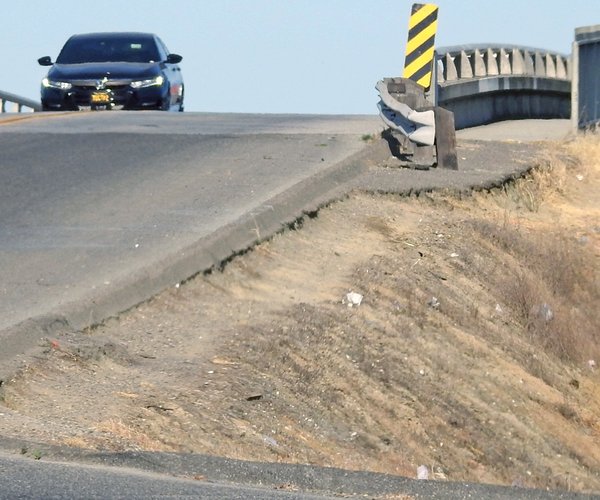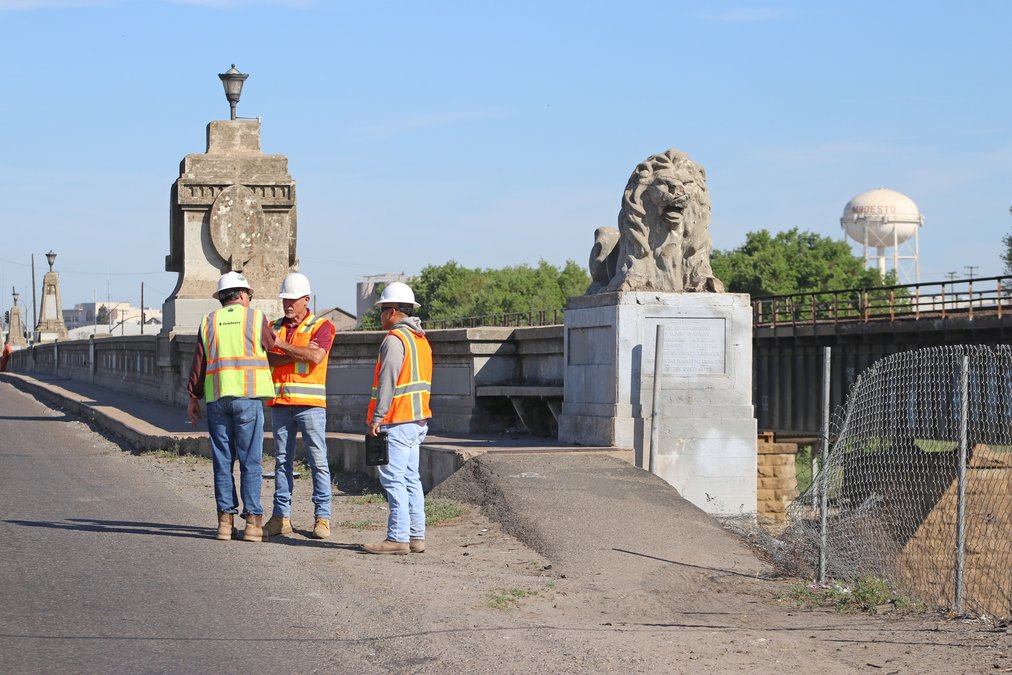
The traffic across the Seventh Street Bridge was noticeably heavier on Sunday.
It was the last day to drive across the 109-year-old bridge which once carried Highway 99 traffic between Ceres and Modesto.
As one gentleman and his wife walked across the entire 1,200-foot span and touched the face of a concrete lion at the south end, it had the air of a funeral of sorts as they said their final goodbyes.
Others like Adam Vera drove down to take photos one last time with his car by the bridge.
News of the imminent demolition of the bridge brought a flurry of social media posts reminiscent of an obituary.
Jackie Eakins expressed sadness, writing, “I remember my grandma telling me when she was little she used to play on those lions. She has been gone for almost 29 years. Wanted to get out there today as well to get pics but have been sick. Kinda sad.”
Terry Stark stated that he loves the old bridge and that “it shouldn’t be removed.” But others acknowledged that the bridge was unsafe and that repairs or retrofitting wouldn’t make sense considering it’s too narrow for the present traffic demand over a century later.
Later this week workers will begin their attempt to pry the lions off of the perches they’ve been resting on since Woodrow Wilson was president but some are unsure how removal will go. Plans are to place the decorative lions in a new pedestrian plaza that would connect the new bridge with the proposed Tuolumne River Regional Park’s Gateway Parcel and to the Tuolumne River itself.
A foreman at the bridge on Monday said that demolition will likely begin at the north end by use of heavy excavators equipped with the attachments like hydraulic breakers and hammers. Piece by piece the concrete chunks will be transported for recycling.
The bridge is one of the last – if not the last –canticrete bridges in the state.
All the complaining about the loss of the iconic bridge may go away once the public is introduced to the smooth, much wider four-lane bridge to take its place by 2027. The new bridge will include two standard travel lanes in each direction with a raised median; five-foot-wide shoulders on each side of the bridge that will serve as Class II bicycle lanes; a Class 1 multi-use path on the west side of the bridge; and a standard sidewalk on the east side of the bridge.