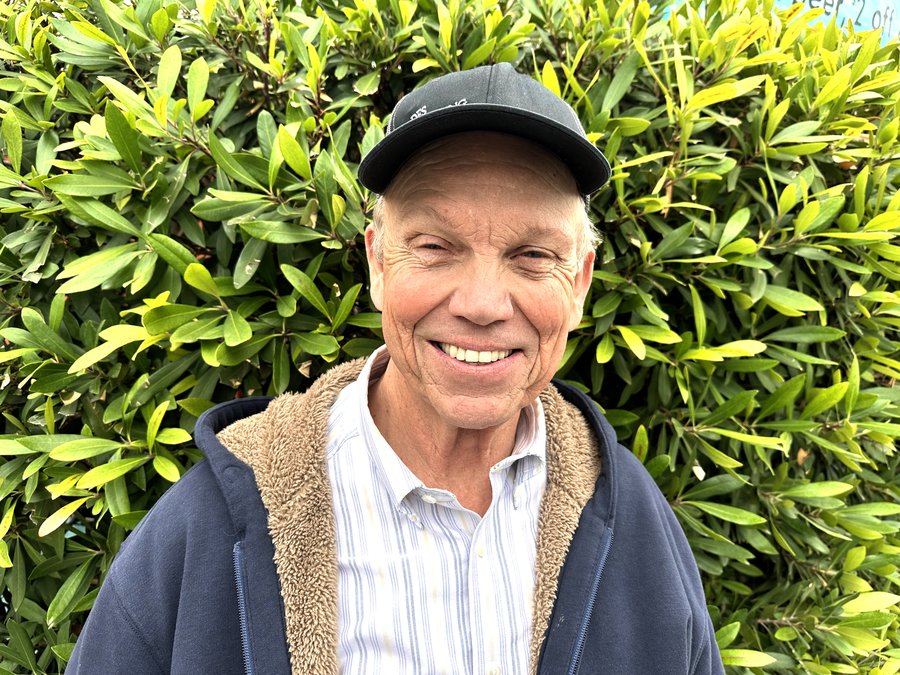
While growing up in Ceres, Lonny Davis earned a reputation as somewhat of a hell raiser. The truth is that his mother handed him his 1970 Ceres High School diploma through the bars of a jail cell.
As if a light switch turned on, one day in 1971 he experienced what he called a “spiritual collision” with God that spun his life around 180 degrees and he vowed to make things right with the world he troubled.
“I went from Al Capone to Mother Teresa in a 24-hour period,” said Davis. “I was rocked and that was during the ‘Jesus Movement.’ It was a spiritual encounter not involving any human agency.”
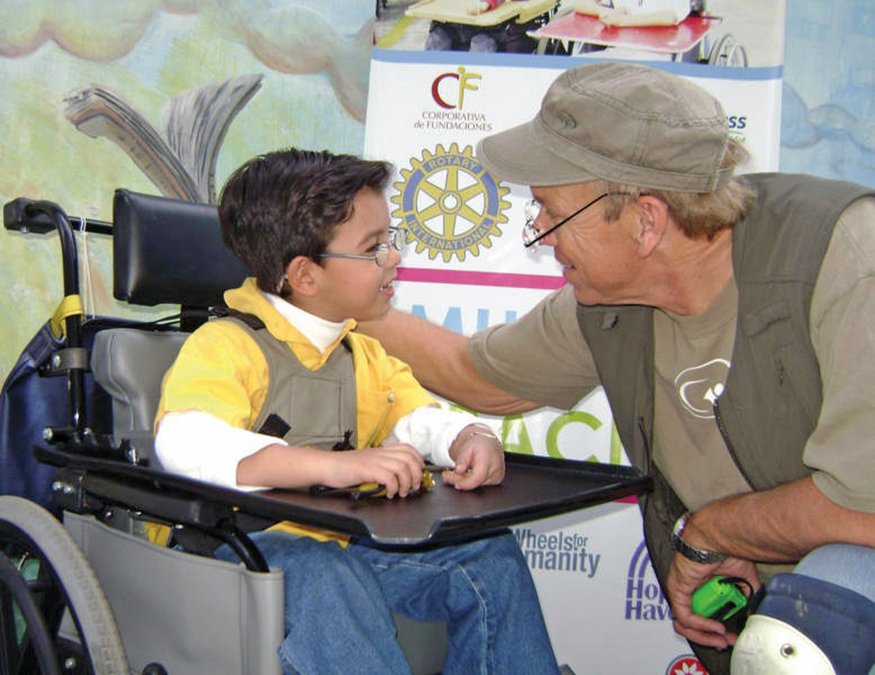
Now at age 73, Davis’ has certainly made things right through a life of service which includes 25 years of distributing wheelchairs to the handicapped children and adults in impoverish parts of the world through Hope Haven West; and being a saving grace for countless chronically mentally ill individuals cared for at his Davis Guest Homes.
Davis was born at Scenic General Hospital in Modesto when his parents, Walter and Mary Davis were living in Empire. In 1958 they moved into a house on Hatch Road which later was expanded and turned into Davis Guest Home. Part of the reason for moving to Ceres was because his dad was a ranch foreman on Dr. Donald P. LaTourette’s properties which were later turned into housing subdivisions. The other reason was to be near the Seventh-day Adventist School located near Central Avenue and Hatch Road.
Raised in the Seventh-day Adventist Church, Lonny said he had a “colorful youth” and that he got kicked out the grade school operated by the church.
“I parted company with the Seventh-day Adventist School when I was probably a junior,” said Davis, who in jest added, “it was time, they were bright people but they wouldn’t listen.”
Davis also got in trouble at Ceres High School where he transferred to.
“Ceres High, at the time I transferred, was an open campus which was an interesting experiment, and I think subsequently someone in authority realized that maybe this isn’t a good idea for high school students,” Davis said. “There was no real monitoring the students so you could come and go. I had a 1.76 grade point average. Yeah, I got into a bit of trouble.”
Davis wouldn’t say what crimes he committed, only going as far as: “For a lot of nefarious activities that I probably don’t want mentioned in the Ceres Courier. But I was a little hell raiser.”
‘Spiritual collusion’
Drug abuse was a mainstay of his teen years. While listless and out of high school, Davis recalled one evening walking toward Central Avenue when a car pulled up, the window rolled down and the young hippie was asked if he wanted to go to church. Davis had been kicking around the idea and felt it was the nudge he the needed, so he agreed to go. The man in the car was Ricky Barrows, brother of Billy Graham evangelist Cliff Barrows, a Ceres native. Barrows drove Davis to a revival at Bethel Temple in Turlock where he experienced his “spiritual collision.” He compared it to the Apostle Paul’s experience of getting “knocked off his horse and his life was changed. Well, I had a similar encounter.” He interjects more of his humor: “No horses were involved, no animals were hurt during this intervention.”
Agape Force tours
Davis spent the next 10 years on the road traveling from church to church working with Agape Force, a ministry involving singer-songwriter Barry McGuire.
“The agape force was an organization that essentially was instrumental in influencing Christian music, and particularly kids’ music.”
Those experiences with Agape Force led him to be invited last year to speak at Oxford University led by a teacher who was teaching a class of graduate students dealing with the Jesus Movement.
“He had me come in as this token hippie and share my experience. It was kind of fun.”
Davis and wife Lisa crafted a vacation around the trip.
His first marriage ended in divorce about 30 years ago and a few years passed when he began dating Lisa, the daughter of his bookkeeper at Davis Guest Home. They’ve been married 28 years now.
“We’ve done 124 projects with Hope Haven West all over the world and distributed 27,000 wheelchairs up to this point in time and she’s gone with me on every one of them.”
The couple recently returned from Lima, Peru where they distributed wheelchairs. Next year is booked solid with more distributions. February takes them to the Philippines, followed by a trip to Chiapas, Mexico in March. Scheduled for April is a visit to Puerto Viejo, Ecuador. In May Davis will be off to Oaxaca, Mexico, where a small army of all women Rotary members will work hard, once again, to help out behind the scenes.
The gift of a wheelchair can mean a child not having to crawl through the streets on their bellies or relieving parents of the backbreaking task of having to carry their child everywhere.
Davis – he left the Ceres Rotary Club to join the Modesto Sunrise Rotary Club – has found great support among the Rotary Club members to present wheelchairs to Third World nations.
About 120 volunteers help on wheelchair distributions, with many coming from the various Rotary Clubs in the area like 80-year-old Don Murphy who has been on 30 trips.
Love helping others
“I warn people, this is the humanitarian equivalent of fentanyl. It’s addictive. And so you’ve got all these people to just keep coming back. I get a lot of veterans to just sign up again and again and again. It’s not uncommon. I got a lot of people that just absolutely love doing this. And it is. It’s a kick. You know, at the end of the day, you’re looking at 50 families, 50 kids, and you know you made a difference in their lives.”
Hope Haven partners with Joni & Friends started by Joni Erickson-Tada to refurbish wheelchairs through prison inmate labor.
The Davises plan to take a personal trip this summer and jump right back into humanitarian work in August in Guanajuato in Mexico and Kenya, and Africa later in the year.
Davis said he expects to continue in the work “as long as I got energy to do it.”
Davis Guest Homes
Davis recalls how he barely was able to leave Ceres in his growing up years except for the single family trip made to Half Moon Bay and Long Barn, which may have fueled his desire to see the world. While studying in Amsterdam, his dad lost the manager to the guest home so Davis returned to help out on a “temporary basis.” The arrangement, however, became permanent.
Davis Guest Home was started by his mother who was a Certified Nursing Assistant (CNA). When the state began closing mental hospitals and forcing thousands of mentally ill persons on the streets, Mary Davis felt the tug to act out of Christian compassion.
“They needed places so my dad built on two rooms at our house over here on Hatch Road. We took in four people when I was 14, and then from there it was like every time they got a few shekels they’d run down to the bank and get another loan, and Dad would build another room, and he figured out that he could get out of the fields. He could retire as well and so they just kept on building it.”
Davis said his folks were very simple and were overwhelmed by the growing state regulations involved with running an adult care facility and “they were ready to step away.” So in 1981 Davis bought out his parents’ enterprise to operate Davis Guest Homes which today has grown to eight facilities caring for 265 residents and employing 195, including psychiatrists and nurse practitioners.
Residents housed in his adult residential facilities come from 30 counties in California, coming from as far south as Santa Barbara and all the way north to the Oregon border.
Because of the highly structured program, Davis said his guest homes and the community have gotten along great.
Dealing with homelessness
Having dealt with those dealing with mental issues for decades has given Davis an insight that he’s not afraid to share.
Davis said it’s indisputable that most of the homeless folks who are mentally ill are “self-medicating.”
“Certainly a large percentage of the people that are mentally ill are consuming drugs. And then a lot of people that are consuming drugs are likely going to become mentally ill if they continue to track down that way. So I think the homeless population, which numbers about 180,000 conservatively in California are struggling with some kind of addiction and I would suspect 70 percent of the homeless are mentally ill and I don’t think that’s really a contested observation.”
Davis rails against the pervasive mindset of the judicial system and policy makers that came about as a result of 50 years of case law that the mentally ill should be allowed to populate the streets as a “civil right.”
“The result is that we’ve got 200,000 people on the streets that are defecating on your front yard and breaking your windows, can’t put two sentences together and eating yesterday’s Kentucky Fried Chicken out of the gutter. I don’t have any confidence that we’re moving toward a solution.”
He noted that the state’s Housing First and other initiatives have failed to reduce California’s homeless problem. Davis also doesn’t see the new CARE Court recently introduced in Stanislaus County making any inroads in solving the homeless problem locally.
“We still have more people that are mentally ill on streets than we ever have. And so, obviously, after billions and billions of dollars being poured into these initiatives, they just simply haven’t worked.”
A solution to homelessness?
Davis recently had a chance to advise GOP gubernatorial candidate Steve Hilton that the answer to the homeless problem is a “more robust application of conservatorship laws in which these individuals will be given compassionate treatment and a place to live, custodial care.” He even suggests an ICE style of removing the mentally ill from the streets and forcing them into custodial care facilities were they can undergo rehabilitation.
He also believes the state could revive closed down mental health facilities.
Davis considers himself a self-educated man who has an appetite for books that cause him to think deeper than most. He is especially keen on the works of Rod Dreher who has authored “Live Not by Lies,” and “Living in Wonder: Finding Mystery and Meaning in a Secular Age.”
Longtime residents of Ceres may remember the time in the 1990s when Davis opened Uncle Lonny’s Books & Beans on Mitchell Road, an enterprise that eventually proved not profitable.