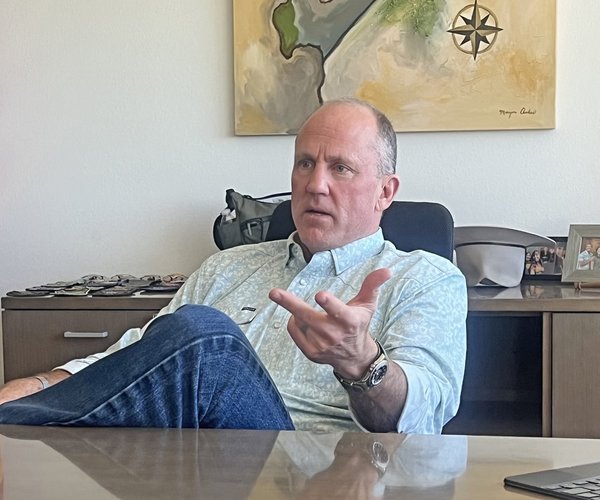
Ceres Mayor Javier Lopez funded his own recent visit to Washington, D.C. to lobby for federal funding opportunities for Ceres as well tell officials there of the city’s needs.
Lopez began his report at last week’s Ceres City Council meeting by saying that no taxpayer dollars were used to cover the cost of his flight, hotel and travel expenses.
“I felt that it was very important to make this trip because the city of Ceres, like many rural communities, continues to face significant needs across several departments,” said the mayor. “Building relationships at the federal level is critical if we went to a position, our city for future support and funding opportunities.”
Over a two-day period Lopez also met with representatives of Capital Advocacy, a firm hired by the city to seek out grants for Ceres. The firm’s team helped coordinate meetings with the federal offices and agencies. They included the staffs of the White House Office of Intergovernmental Affairs, U.S. Senators Alex Padilla and Adam Schiff, Congressman Adam Gray, the Department of Transportation, the U.S. Department of Justice Office of Community Oriented Policing Services, the Senate appropriations subcommittees on transportation, housing, and urban development, and the House transportation infrastructure committee, and subcommittees on water resources and environment.
He said smaller cities like Ceres “often face the same challenges as larger cities, but with fewer resources and less access to federal funding opportunities.”
Key priorities presented during the discussions included public safety funding, infrastructure improvements that support housing growth and economic development, water and wastewater infrastructure improvements and transportation and mobility projects that improve safety and connectivity.
Lopez also followed up on a request for grant funding to renovate the Ceres American Legion Memorial Building, so it may become a viable veterans’ community center.
“This project would provide a dedicated space for our local veterans and serve as a cooling center during extreme heat events and often impact rural communities like ours in the Central Valley.”