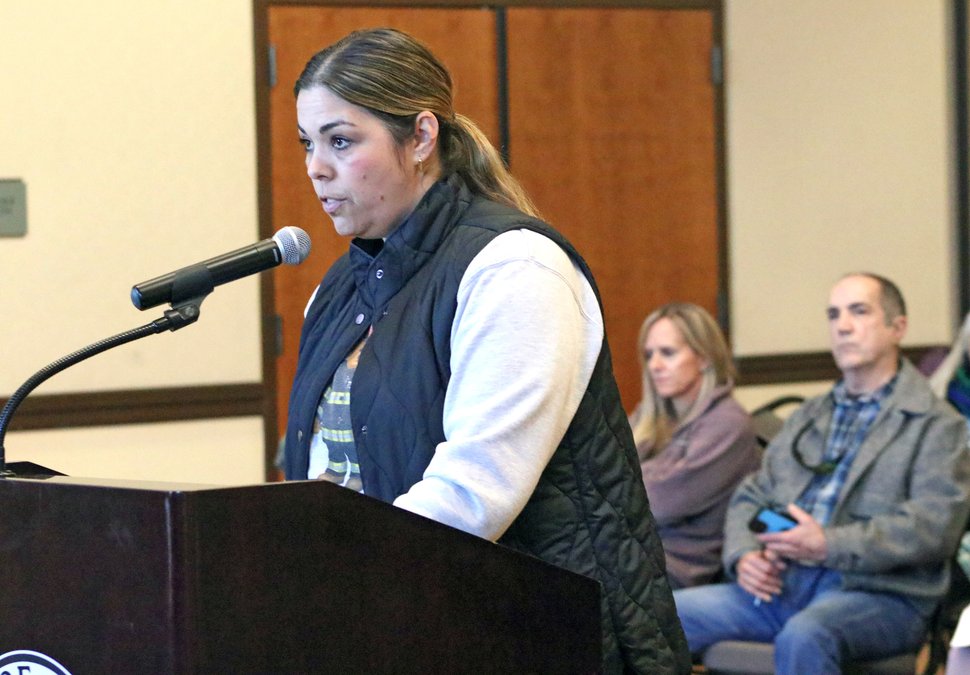
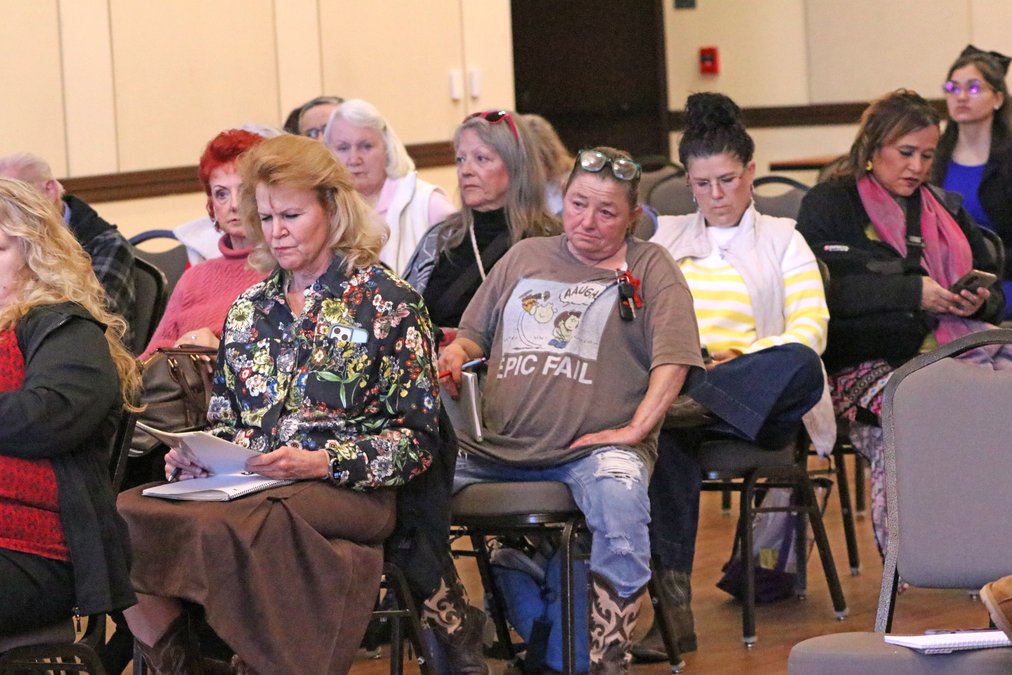
Pet lovers gave two hours of input on what the local animal shelter needs to do to improve services during a special board meeting held in the Ceres Community Center.
A room of about 45 cat and dog lovers took turns giving their thoughts and suggestions to the Stanislaus Animal Service Agency (SASA) of which Ceres is a member. SASA also contracts with the cities of Modesto, Hughson, Patterson, Waterford and the unincorporated areas of Stanislaus County. It is not a county agency, however, but governed by a board comprised of city managers.
The board heard loud and clear that SASA needs to:
• Return to the successful Trap/Neuter/Return (TNR) program for cats;
• Improve public access to low-cost and timely vaccinations and spay-neuter services for dogs and cats to prevent unwanted pets on the streets;
• Offer better customer service by being responsive to answer public questions.
• Either partner with a non-profit pet organization to offer more services or find ways to develop more revenue.
Ceres City Councilwoman Rosalinda Vierra shook her head Modesto City Councilman Chris Ricci’s suggestion that his city and Ceres double payments to SASA. Vierra quickly noted that Ceres has budgeted $837,342 in payments to SASA this budget cycle which is a whopping increase from the $647,318 paid the last fiscal year.
“If this number, which went up last year, even closes to a million dollars, I’m sure the residents are gonna be asking the same thing they did last year: What am I getting for that million dollars, or in this case $837,000?,” said Vierra.
Vierra works at the Modesto Junior College School of Agriculture and suggested that SASA tap into the veterinarian technician program, of which there are 600 students, to volunteer services.
Laurie Haley, who works for a nonprofit pet clinic in Reno, said that everyone agrees that SASA is underfunded and understaffed.
“I think we need to be more creative in looking at funding sources,” said Haley.
She noted how Stanislaus County voters approved an eighth-cent sales tax to generate $24 million annually for the libraries.
“I’m not saying that a sales tax increase is the way to go because I know most politicians and administrations will not support increased taxes,” said Haley. She noted that the Washoe County Regional Animal Services addresses enforcement and impoundment while a non-profit organization handles adoptions and clinics.
Ceres resident Karen Mosser, a shelter volunteer, said it’s imperative that then shelter have a successful T/N/R program.
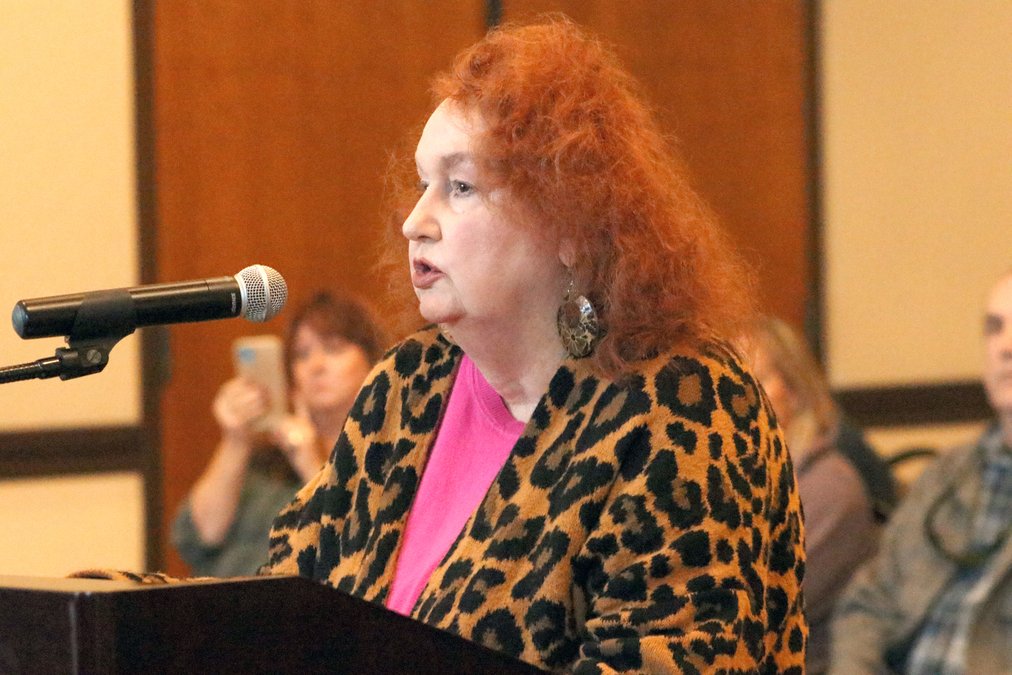
Rural Ceres resident Joann Ronngren complained that her area of Grayson and Jennings roads is a hot spot for dumping stray animals. She said she contained four puppies at her home and two dumped German shepherds that went to the shelter but got the run-around when trying to find out the fate of the dogs. Only until after contacting Supervisor Terry Withrow’s office complaining about a lack of response, Ronngren learned the dogs were adopted out together.
“Why couldn’t the shelter just tell me that?” asked Ronngren. “Wouldn’t that be a positive thing to let somebody know? The lack of simple transparency and poor communication is unacceptable and erodes trust and makes it harder for residents that want to help like me feel supported.”
Ronngren went on to complain that the SASA shelter faces chronic overcrowding, high euthanasia rates, limited affordable spay-neuter/vaccine services, weak support for feral cats, and bad customer service that leaves people with hurt feelings.
“Boost accessibility to low-cost spay/neuter wellness clinics to cut in-take and that includes unsheltered animal owners. Are we getting those animals fixed? Work on preventative measures, such as community education, expand TNR, fix customer service, and create transparency, build stronger foster rescue partnerships, and staffing to manage capacity.”
She said the shelter can improve customer service through free training, improve morale and make better use of positive social media posts.
“Rather than in-taking animals … provide rehoming resources and put the responsibility back on me, animal owner, in a gentle and helpful way, but don’t just let them hit the easy button when they need to get rid of their dog, they need resources.”
Tina von Stade said she understands that SASA had a successful T/N/R program because of a grant snagged years ago.
“But before they got that grant, they had T/N/R,” said von Stade. ”And at that time, they were averaging a T/N/R of about 2,000 cats per year. We don’t have T/N/R right now. We need T/N/R. Volunteers would then release the cats back into the community. I would put that as one of your number one priorities – getting a T/N/R program. Losing a grant doesn’t justify eliminating a community T/N/R program. It’s needed. What happened to the low-cost vaccination clinic? The clinic generated revenue to help fund programs like T/N/R. And it’s also California law that a shelter provides low-cost vaccination clinics.”
She also said that trappers need to have access to appointments quickly.
Von Stade also criticized SASA for not providing funds for those foster families which take in animals until they are adopted.
“Fosters are paying out of their pocket for basic supplies, formula, cat food – I mean those are just basics. There’s so much more of that a foster needs. No foster training is provided. We need a solid foster program to be able to continue with our current fosters, but we also need to start recruiting new fosters. So if we can work on getting a very viable foster program, I think that’s going to be helpful.”
Dana Iller related problems in the impoverished Modesto Airport District where she lives. As a cat lover she said she began feeding stray cats.
“I was getting at least one new cat a week that was being dumped off,” said Iller. She spoke to the shelter and was told they accept only 15 cats a week or 60 cats per month.
“That’s 10 cats per city per month. That is not enough. You’re not caring for the cats.”
In time she learned not to take cats to the shelter since they euthanize them after 10 days.
She grew emotional when she said: “I’m not my best to take care of the cats that have come to me. I’ve probably spent $150,000 getting them spayed and neutered, feeding them. Spent at least $3,000 a month. I’ve spent almost my entire inheritance doing that and it’d be nice to get a little bit of help … because I am taking care of a lot of animals, a lot of cats. And I know the problem is money.”
Besides getting non-profit organizations involved and seeking grants, Iller said she’d like to see a one percent sales tax measure.
She also asked the board to reconsider opening the former shelter on Finch Road north of Ceres.
Ricci told the board that it should seek Requests for Proposals (RFPs) from non-profit groups to partner with the shelter.
The Modesto City councilman said the shelter’s euthanasia rate is “dishonest” as the shelter has reduced intake and required appointments.
“All we’re doing is shifting the problem to the streets. It’s the same thing we’re doing with the cats. It’s not an acceptable solution. To say the euthanasia rates are going down is just baloney. They’re just dying on streets.”
A Modesto resident named Tanya said she has done her part to help trap feral cats but is frustrated in the limitations of cats accepted at the shelter. She said a lot of volunteers are driving cats to Sacramento to fix “fifteen to 20 feral cats.”
“It’s very expensive and we get out sometimes 4 o’clock in the morning. It’s not sustainable. These are our community cats. We need our services here.”
She too advocated for T/N/R to prevent the births of unwanted pet.
Laura Mogensen, a resident of the Maze Boulevard and Nebraska Avenue, shared that a lot of folks like to dump animals, including cats, dogs and rabbits. She noted that in 2010 she volunteered for Alley Cat Guardians where 50 cats were sterilized a day.
“SASA is not taking care of our cats or our community cats. Fifteen appointments a week is insane. We were doing 52 cats every week all year long.”
By contrast she noted that Sacramento fixed 17,000 cats in 2023.

“Four hundred that SASA has done last year is unacceptable,” said Mogensen who suggested SASA partner with a non-profit.
“We need to go past a spay and neuter program. We need increased vaccinations for our community cats – every Saturday shot clinic would be absolutely marvelous. We need transparency about humane euthanasia policies. We need to end the current capacity of care model that is creating the strain.”
Mogensen went as far to say she’d like to see a two percent sales tax increase.
Brandy Louise Rollins, a rural resident who has worked with cat networks, said her team of two volunteers trapped, spayed or neutered, vaccinated and returned over 300 feral cats between July and December. They also re-homed over 70 kittens, T/N/R’ed 50 cats this month and fostered 22 kittens “that we are networking to get into homes.”
She said most of the costs are coming out of their own pockets with some limited fundraising.
“This work is simply too expensive for us as individuals to carry on alone no matter how passionate we are.”
Piper McKnight came up with a unique idea that earned some chuckles – placing animals with inmates in the local jail and give vocational training for inmates.
“We have to consider doing things that are out of the box if we want to actually solve this problem,” said Modesto councilman Chris Ricci, without spending more money.”
Nancy Klein, who has been involved in animal welfare for just over 15 years and manager of the Stanislaus Wildlife Care Center in Hughson said the board has been tone deaf to the need for changes.
“It’s clear the board is not knowledgeable about animal welfare,” charged Klein, “and that’s depicted in many meetings and including today. This is not personal – I don’t have confidence in this board.”
She cited the city of Stockton which operates a 50-50 shelter with the city running its own control division with fines, quarantines and a nonprofit runs the soft side of pet adoptions, foster homes and medical care.
Klein suggested that Modesto Police’s animal control division should not be separate from SASA for a possible budget opportunity.
“It also would less confuse the community who thinks Modesto is Stanislaus. We currently do have one vet that works three days a week, who earns a quarter of a million dollars a year, and she also has a public sector job. Why isn’t she full-time with us? We are not marketing the vet position. The shelter has been closed for three weeks. I’d like to know what Modesto and Stanislaus animal control officers have been doing for three weeks if they’re not about making stray animals.”
After the lengthy input members of the SASA board spoke.
Mike Willett, the assistant city manager of Patterson, said SASA staff is doing the best it can but said “we probably need to look at other models, and using the resources and creativity of nonprofits is a great way.”
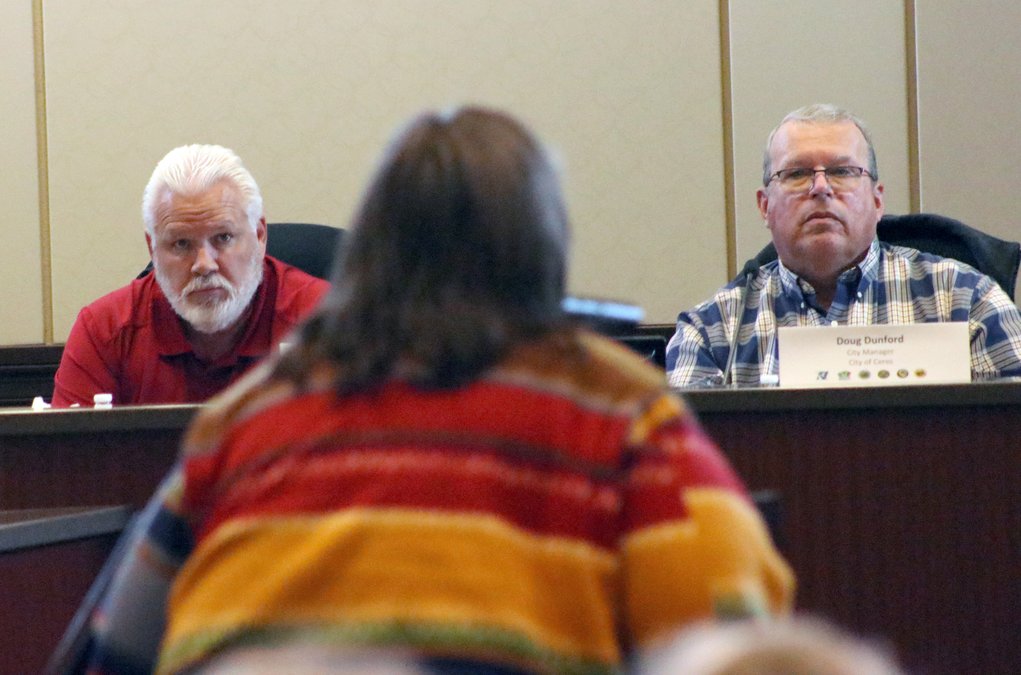
SASA board member and Ceres City Manager Doug Dunford, whose family has two dogs and a cat, said the agency needs to get through the red tape and consider options.
“We’re gonna make some changes,” he promised.
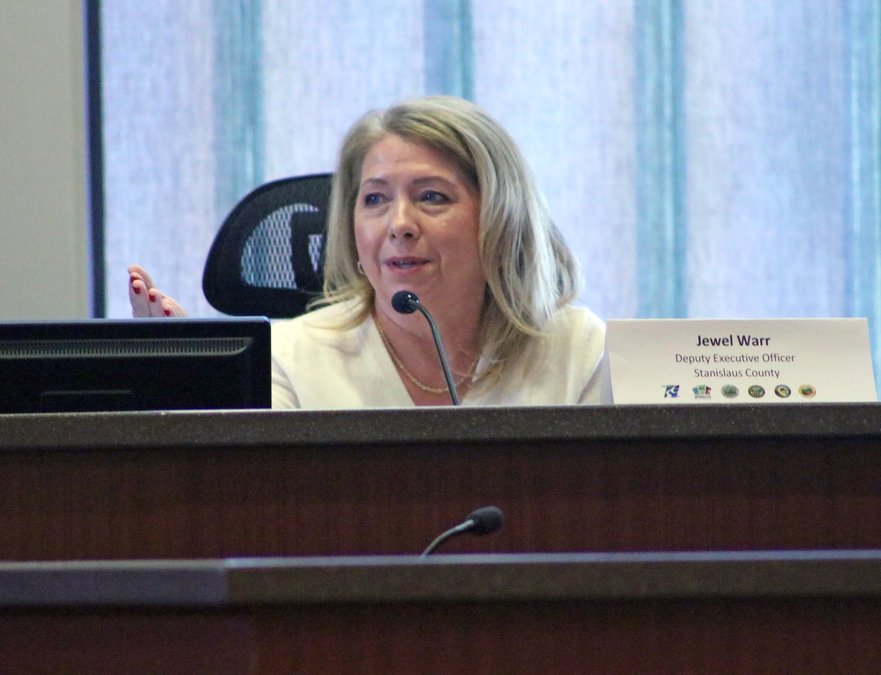
With a new SASA director in Lily Yap, Jewel Warr, the deputy executive officer of Stanislaus County, said it’s time to refocus our energies and go through strategic planning sessions such as this and it’s just really nice to see this come together.”
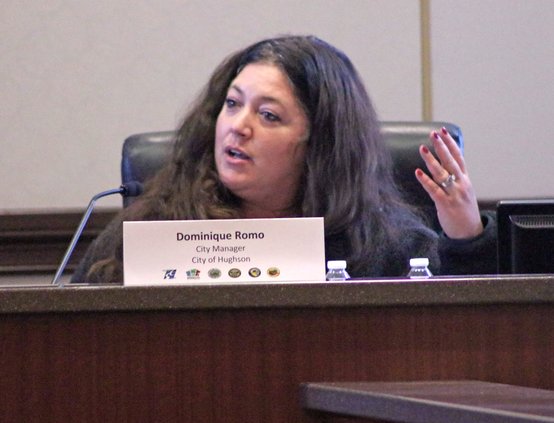
“I’m really open to being creative and looking for other resources, strengthening our partnerships,” said Hughson City Manager Dominique Romo.