Anyone who has been paying attention to the Ceres City Council agendas noticed there is now a Spanish version. That’s because of SB 707, another law that bored lawmakers in Sacramento dreamt up to make the lives of city clerks more miserable and onerous than they already are.
Compliance planning is already becoming a public issue. Cities and agencies in the Sacramento area, including Shasta County and Rio Linda/Elverta agencies, have been actively discussing SB 707 requirements during recent meetings, weighing cost, staffing, and technology options ahead of the deadline.
Sacramento County Office of Education has already begun adopting AI translation platforms like Wordly as a more cost-effective alternative. Early data shows some cities cutting translation costs by more than half while expanding access to dozens of languages.
It’s an example of how the English speaking world – and America’s official language remains English – must accommodate the newcomers who haven’t learned the language nor likely ever plan to learn.
If I moved to Mexico, you betcha I would first learn the language so I could communicate with neighbors, police, merchants, etc. It doesn’t seem to work the other way when others come here. At what point is the immigrant expected to assimilate by learning the country’s language, history, laws and customs? It won’t happen if we are the ones to accommodate and forced to change our practices; it’s a disincentive to learn English.
The part of the bill that really frosts me is that it dictates – the state loves being the dictators of every aspect of our lives – that agencies make “reasonable efforts” to invite and inform groups that do not traditionally participate in public meetings. This includes outreach to non-English media organizations and civic groups serving diverse communities. While the law gives agencies broad discretion, the intent is to go beyond simple notification and actively engage the entire community.
Cities have slowly slipped away from even notifying us run-of-the-mill English newspapers but now they are told to reach out to Latino media? This paper has to routinely scour social media to find things that 20 years ago were funneled directly to us. So shouldn’t established English language media outlets be engaged first?
* * * * *
The California Legislature’s recent vote to advance Assembly Bill 1421 — a bill that extends a study of a “road usage charge,” sometimes called a mileage tax — is yet another example of Sacramento Democrats’ eagerness to burden drivers with new fees that will raise the cost of living for working families and small businesses. I say Democrats but no Republicans voted for AB 1421. While proponents insist this isn’t a new tax yet, the reality is clear: extending a study whose sole purpose is to pave the way for a per-mile tax is a transparent first step toward imposing a new way to tax motorists — a path Californians will regret.
AB 1421 doesn’t charge drivers a new fee today, but it does keep alive and expand a long-standing effort to consider charging motorists based on how many miles they drive instead of how much gas they buy. The bill extends the work of California’s Road Usage Charge Technical Advisory Committee — a body that has been studying mileage fees for years — to 2035 and directs that committee to consolidate its research and offer recommendations to the Legislature.
This debate is tied to the broader idea of a so-called “road usage charge,” an alternative revenue model that would eventually replace or supplement the gas tax as electric and fuel-efficient vehicles reduce fuel tax revenue. But willingness to study this idea is not harmless: studies craft the narrative and build the infrastructure needed to implement a full-blown tax later.
And we all know Democrats won’t abandon the gas tax at the same time. They are addicted to new revenue via taxation.
California voters repeatedly opposed increases in fuel and vehicle taxes, most notably Proposition 6 in 2018, which would have repealed a major road and fuel tax increase. Prop 6 lost at the ballot box, but nearly 43 percent of voters supported it in a state that already has some of the highest fuel costs in America. That resistance wasn’t a fluke — it was a clear signal that Californians are fed up with policies that squeeze motorists while doing little to materially improve transportation or infrastructure performance.
Despite that history, Democrats in Sacramento are doubling down on efforts to find new ways to extract money from drivers.
The chorus backing this study comes almost entirely from Democratic lawmakers and allied bureaucratic agencies. Supporters argue that as electric vehicles proliferate, gas tax revenue shrinks, and thus California needs a new runway of funding for roads or transit. This reasoning ignores two realities:
1. California already has the highest gas tax in the country, and most residents feel they are paying plenty for transportation infrastructure relative to the condition of the roads they use.
2. Sacramento routinely fails to spend existing transportation dollars efficiently — or transparently — yet asks for more funding before fixing past problems.
The study’s supporters couch the mileage fee as fairer, claiming it makes everyone pay their “fair share.” But fairness shouldn’t be Washington-speak for “collect more money.” And fairness certainly shouldn’t be measured without regard to the real economic stress Californians are under.
California already suffers from high costs of living, driven by steep housing prices, energy costs and taxes. Adding a charge on every mile driven would hit Californians where it hurts: their wallets.
Even independent critics have estimated that a per-mile charge could cost drivers hundreds to over a thousand dollars per year, depending on how far they commute and how the fee is structured.
And make no mistake: mileage fees are regressive. Rural residents and long-distance commuters here in the Central Valley — often lower- and middle-income workers who can’t afford homes near job centers — would pay far more under a usage-based scheme. Urban residents living closer to work might see less impact, deepening the economic divide between regions.
Furthermore, if and when this mileage tax becomes reality, it would stack on existing costs — high gas prices, expensive auto insurance, tolls, registration fees, and general vehicle costs.
Beyond the costs it would inflict, there are legitimate concerns about how such a tax would be administered. Tracking miles could involve invasive GPS tracking or other monitoring systems that raise privacy questions for law-abiding citizens. Californians shouldn’t have to choose between contributing to infrastructure and surrendering their privacy.
From housing levies to energy fees, Sacramento’s approach to governance seems to be: identify a public concern, then tax it. Drivers should recognize this pattern for what it is — a government constantly reaching deeper into our pockets rather than making tough spending choices or reforming inefficiencies.
Rather than expanding studies that normalize yet another potential tax, lawmakers should respect the clear message voters have given time and again: Californians do not want to be treated as ATMs for Sacramento’s ambitions. Leadership should focus on fixing existing tax and spending structures, not inventing new ways to squeeze money from hard-working residents.
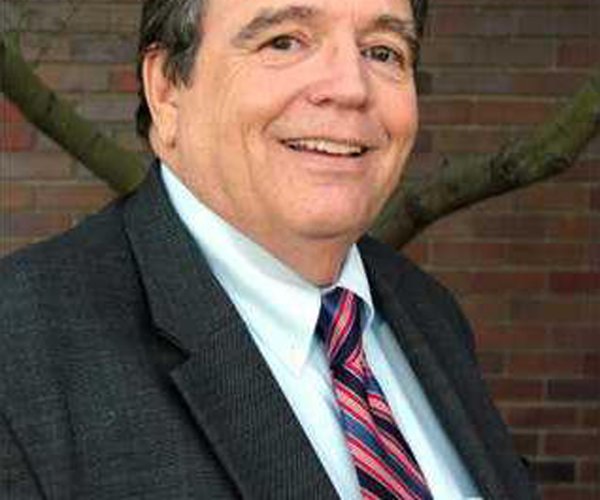
This column is the opinion of Jeff Benziger, and does not necessarily represent the opinion of The Ceres Courier or 209 Multimedia Corporation. How do you feel about this? Let Jeff know at jeffb@cerescourier.com