By TIM SHEEHAN
Special to the Ceres (Calif.) Courier
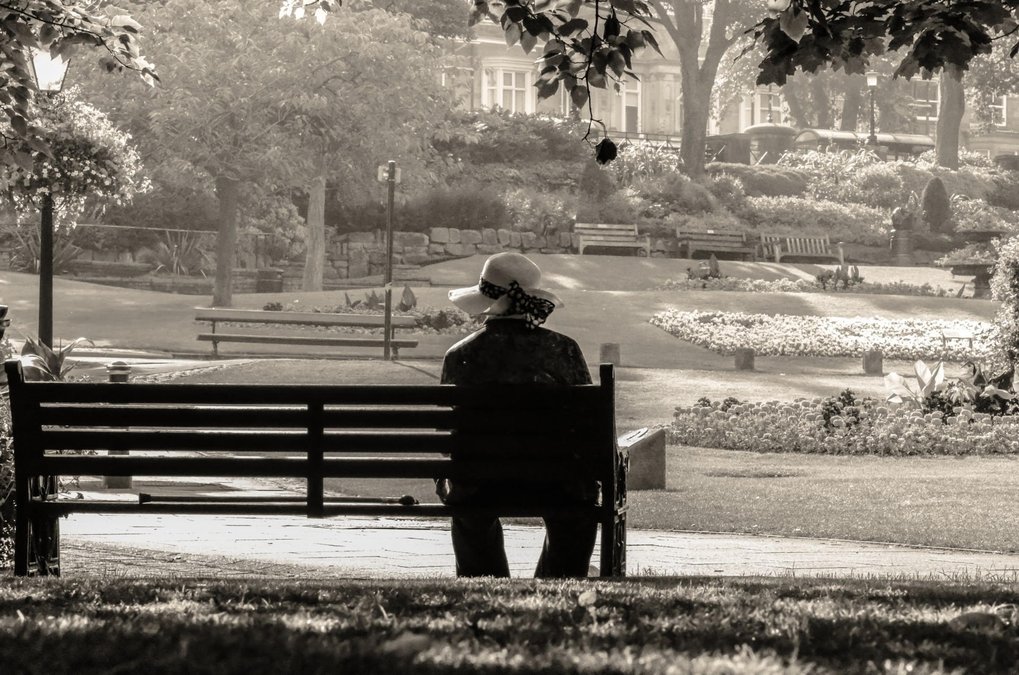
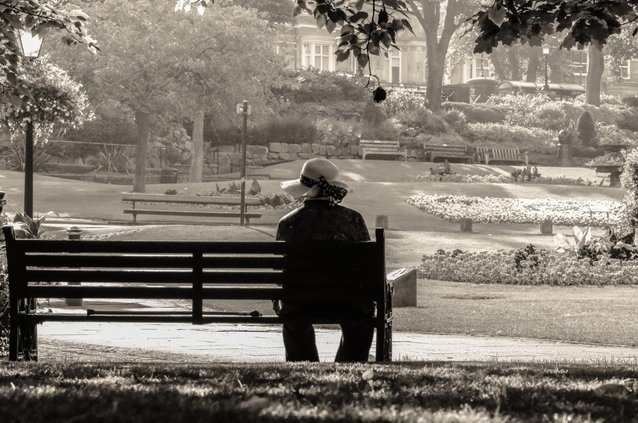
The number of senior citizens who live alone in the Valley has grown by more than 30% since 2012, adding to a population at increased risk to both physical and mental health. That amounts to more than one in five Valley residents over the age of 65 living with no spouse, family or significant other.
According to data from the U.S. Census Bureau, almost 122,000 men and women age 65 and older live alone across Fresno, Kern, Kings, Madera, Merced, San Joaquin, Stanislaus and Tulare counties.
In a region where there are already proportionally fewer geriatricians – physicians with specialized training in caring for older people – than California as a whole, research indicates senior citizens living on their own face higher health risks as they encounter more chronic health problems, become more fragile with age, and may confront issues such as cognitive or memory problems.
“For seniors living alone, this can make them especially vulnerable to accidents and hazards in or around the home,” wrote Mark Nathanson, MD, a geriatric psychiatrist and clinical professor at Columbia University in New York, in a 2024 article. “Additionally, the fear of not being able to do things independently can take a toll on a senior’s mental health and self-esteem.”
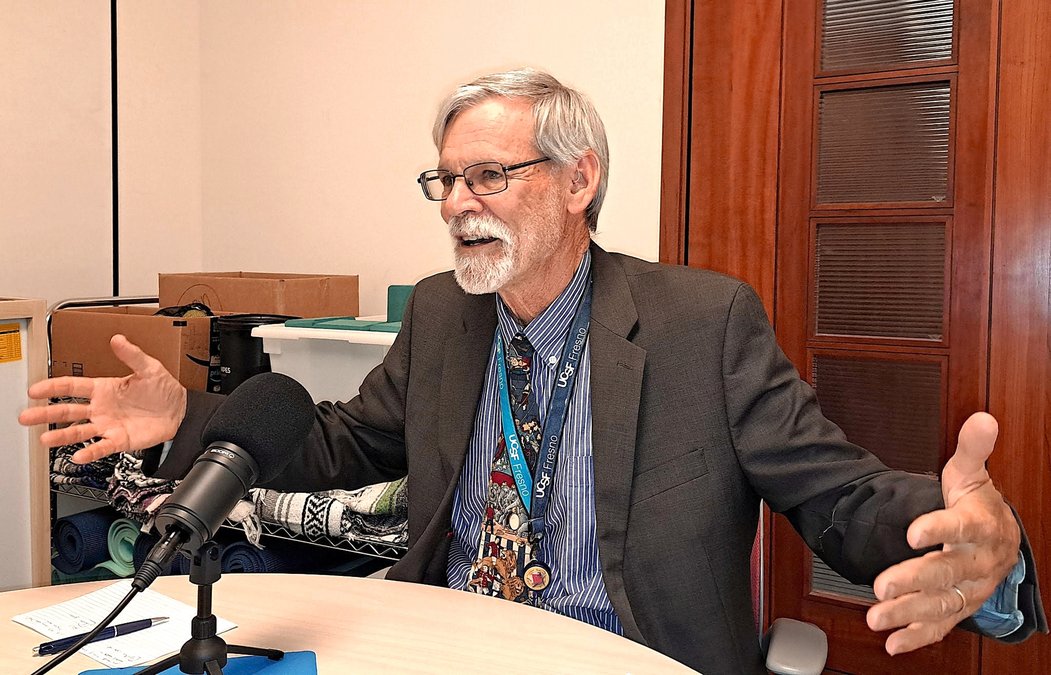
Those points were underscored by Dr. Alex Sherriffs, a physician who specializes in geriatric medicine with the UCSF Fresno medical education program, and by Amanda Nugent Divine, CEO of Kings View Behavioral Health in Fresno.
“Aging alone absolutely increases poor health outcomes,” Sherriffs said in an interview with the Central Valley Journalism Collaborative. “There’s like a 30% increase in cardiovascular disease by virtue of living alone, a 50% increase in dementia, and a 32% increase in stroke.”
Nugent Divine, who holds master’s and doctorate degrees in psychology, emphasized the mental health concerns for solo agers.
“Aging alone is dangerous. It’s bad for the brain,” she said in an interview with CVJC. “The aging process itself is so rigorous, it can be so hard on people that it definitely can tax underlying mental health issues” including depression, anxiety and loneliness.
Sherriffs said seniors living alone in the Valley is becoming more common. As regional demographics and values change, families are becoming smaller. Adult children often move away from their hometown to launch their own lives and families, and there are more older people living alone because they’re widowed or divorced.
“But it doesn’t mean we should be lonely,” he added.
Among the Valley’s solo-aging population, women outnumber men by more than 35,000. In several counties, including Stanislaus, Fresno and San Joaquin counties, the margin of women to men who live alone is about two to one.
“This is, first and foremost, an older women’s issue, because women outlive men and because they’re less likely to remarry after being widowed or divorcing,” reported KFF Health News, an independent, nonprofit health information and research organization, in a 2024 article. “Twenty-seven percent of women ages 65 to 74 live alone, compared with 21% of men. After age 75, an astonishing 43% of women live alone, compared with only 24% for men.”
Additionally, KFF Health News reported in 2024 that almost 40% of seniors living alone have issues with vision or hearing deficiencies, cognitive problems or other disabilities that challenge their capacity to live independently and care for themselves.
For someone facing such challenges on their own, there’s no one else in the household available to help, or to call for help, in the wake of an accident, injury or illness. Think of those often lampooned but deadly serious television commercials from past decades: “I’ve fallen and I can’t get up.”
Falls and other physical dangers
“Falls can absolutely be deadly” for seniors, said Sherriffs. “Less than half of people who break a hip are alive in a year.”
Frailty and a lack of mobility can combine to make a person a shut-in, leading to a diminished quality of life, Sherriffs added, and an elder who is living on his or her own must navigate without help to around the house, around the clutter of furniture or around rugs that create a tripping hazard that can lead to more falls.
The U.S. Centers for Disease Control reported earlier this year that falls are a leading cause of injury for adults ages 65 and older, and are among the leading causes of both fatal and nonfatal injuries among senior citizens.
In the Valley, the CDC’s mortality database reveals that accidental falls were listed as a contributing factor to more than 2,200 deaths among people ages 65 and older across the eight-county region from 2018 through 2025.
Other accidental household mishaps, including drowning and poisoning from medications, were also significant factors in senior deaths in the region.
The physical danger to seniors goes beyond falling and other injuries.
“We’re living longer, Sherriffs said. “That gives us the opportunity to live with more chronic disease.”
As people age, they often are dealing with more health conditions and find themselves managing multiple prescriptions for medications. Most drugs call for a certain dose at certain times, and keeping them straight can be tricky.
“The ability for us to take the medication correctly, if we have two medicines, it falls by half,” Sheriffs said, and is more complicated with each additional medication. “Now add in if the doctor says, ‘I want you to take this one on an empty stomach and this one on a full stomach,’ which may be the best way to take those medications, it gets impractical really fast.”
Seniors’ ability to feed themselves is also a significant concern. In the Valley, nutritional deficiencies are among the leading causes of death for people ages 65 and older, according to federal mortality data.
“Nutrition is huge because it comes back to frailty, it comes back to falls,” said Sherriffs. “We know nutrition is important in terms of cardiovascular health, our risk of diabetes, and more.”
Emotional and mental health
In addition to the physical risks of living alone, as one ages there is also a significant potential for depression and isolation, particularly for seniors who are widowed or divorced, have no children or family nearby or no longer have the ability or desire to drive.
Census Bureau estimates indicate that in 2024, more than 22% of the Valley’s senior citizens were widowed, while more than 16% were divorced or separated. About 6% had never married.
“When someone loses a spouse or goes through divorce, it is important that they, from the beginning, have somebody that cares about them, that can pay attention,” Divine said. “We can say to them, ‘Hey, let me know if it gets bad and I don’t recognize it.’ Because when we’re in the throes of depression, our sensibilities are distorted.”
Divine said that people are wired to be in relationships, and human connections are particularly important as we age.
“We need a partner in aging, and whether that’s a romantic spouse or not is irrelevant,” she said. “It’s really more about, do we have a close relationship with our kids, or do we have a buddy or friend that we can age with, an ‘aging buddy.’”
“I don’t think it matters if it’s in the same household,” Divine added. “It’s just that when we’re in the same household, we notice, like, if there’s food in the fridge. But you can have an aging buddy who is not in the same household, but you see them every day.”
Such a network of people – whether family, neighbors or close friends – is something that both Sherriffs and Divine said is important for seniors who are aging alone. Living alone, they said, does not necessarily mean being lonely.
“You know, many people who are living alone, they like it, they like the independence,” Sheriffs said. “They appreciate that they can do it in their time: wake up when they want, do this now, do that later. That’s fine.”
“It’s when being alone becomes lonely that it’s bad for our health, it’s bad for cardiovascular health,” he added. “It puts us at risk for dementia when …being alone becomes lonely.”
Divine offered similar thoughts.
“You could be not lonely, living at home alone, yes,” she said. “Go out and meet friends for coffee, you know, once a week, twice a week. Those are the people who know you, they know who you are, they see you, and that may be enough for you. It’s a different amount for each person.”
Community resources and connections
Where one lives can affect the availability of resources and services that aging adults can access when they’re living on their own, and complicate their ability to create the types of personal networks or relationships that prevent being alone from becoming lonely.
“I cringe when somebody in their 60s or 70s is talking about building their dream home in the foothills because this is an interaction of a time of life where we’re likely to need more assistance, more social services, more access to health care, and we’re moving to a place that’s farther away from that,” Sherriffs said.
Facilities such as community senior centers are also an important resource for seniors who have the ability to get to them and who may not have the money to live in a long-term care facility or to pay for professional in-home care.
“I think [senior centers are] incredibly, incredibly important, because most people can’t afford options that are available to very few,” said Divine. “Most people are going to be isolated if they don’t have a community center. … I think that’s part of what the county and the community has a responsibility, to provide those options.”
But to Sherriffs’ point, while many smaller cities have community centers or even dedicated senior activity centers, smaller, far-flung unincorporated communities in the region may have few, if any, resources to support those who are aging alone.
“If you don’t have a network, if you’re truly solo, well, you need to think about ways to build a network, because that’s much more satisfying and successful,…” Sherriffs said. “We need a buddy system. … You can make an arrangement that they’ll call once a day and check in, and if you don’t answer the phone, then they’ll call the appropriate number that you gave them, which might be a family member somewhere, might be the police or whatever.”
Companionship from pets
Not every connection needs to be a human one. For many seniors who live alone, a pet can become a valuable companion to help stave off loneliness – provided they can properly care for it.
“I think pets can be lifesaving,” said Divine. “I know some people feel like, ‘Oh my gosh, ‘it’s just an animal, it’s just a dog,’ but oh my gosh, they really can fill that void in a lot of ways.”
A dog or cat, “is just an unconditional source of affection and care, and companionship,” she added. “I think pets are wonderful.”
“Wonderful” is the same word Sherriffs used to describe the benefits of pets for seniors who live on their own.
“That’s an important social interaction,” he said. “I can’t say enough good about it.”
Still, he added, pets cannot completely replace the need for human interactions.
“The pet’s not going to pick up the phone and call 9-1-1 if you call down and there’s nobody around,” he said.
Resources for seniors
Stanislaus County’s Aging & Veterans Services provide information, resources and services for senior citizens, from nutrition and Meals on Wheels programs to financial and insurance counseling, health counseling and more.
Call 209-558-8698, or visit www.stancounty.com/aging/
– Tim Sheehan is the Health Care Reporting Fellow at the nonprofit Central Valley Journalism Collaborative. The fellowship is supported by a grant from the Fresno State Institute for Media and Public Trust. Contact Sheehan at tim@cvlocaljournalism.