As the 2026-27 fiscal year looms on the horizon, the city of Ceres is staring at a budget deficit of $2.4 million but now has far fewer reserves to draw on to make up the shortfall.
Ceres Finance Director Vanessa Portillo gave the Ceres City Council an overview of the dilemma facing councilmembers at a special April 21 budget workshop and at Monday’s regular council meeting. She explained how rising pension and personnel costs are the main driver of escalating expenses in the General Fund.
To plug an expected $2.4 million budget gap, there is talk of the city dipping into reserves once again to dangerous levels.
She said plugging the budget gap with another $2.4 million, would leave the city with just $2 million, which represents just 6.6 percent of budgeted expenditures, which violates the city’s established 18% reserve target. To keep 18% in reserves, the city needs to keep reserves at about $5.4 million.
Portillo spelled out that the reserves are intended to be used “in the event of an emergency or an economic downturn” but with a reserve of $2 million “we wouldn’t have enough funds to cover even one full month of operations.”
Portillo said the city is exploring other cost-cutting measures and discuss them at the next budget session on May 11.
In the past several years, the council has dipped into reserves (the city’s savings account) to balance the budget and ended the 2023-24 fiscal year with a balance of $7 million. The city used about $635,000 of reserves to balance fiscal year 2024-25, and another $2 million to balance 2025-26. The reserves are now at $4.4 million.
The city expects total revenues of approximately $86.6 million with expenditures at $84.9 million. Personnel costs account for about $32.1 million while operations and maintenance make up approximately $52.8 million.
Portillo explained that cities are seeing significant increases in unfunded pension liability. The city is also facing significant increases in the cost of contracting with the city of Modesto for fire service and rising personnel costs while seeing flattening property tax and sales tax revenues. In addition, the city has seen an evaporation of revenue from the cannabis businesses to the tune of a $387,000 decrease.
Portillo said Ceres’ total pension costs have steadily increased from just over $5 million in fiscal year 2021-22 to more than $8 million in the next fiscal year. The city is seeing a 22 percent rise in pension costs to the General Fund between the current and next budget cycles.
The city is also expecting to see a 19 percent increase, or $1.5 million, in the cost of the fire contract with Modesto. Portillo noted that the contract terms are still under negotiation and that “there’s a potential for the final cost to come down.”
Personnel costs remain the largest expenditure category in the General Fund and continue to be a primary cost driver.
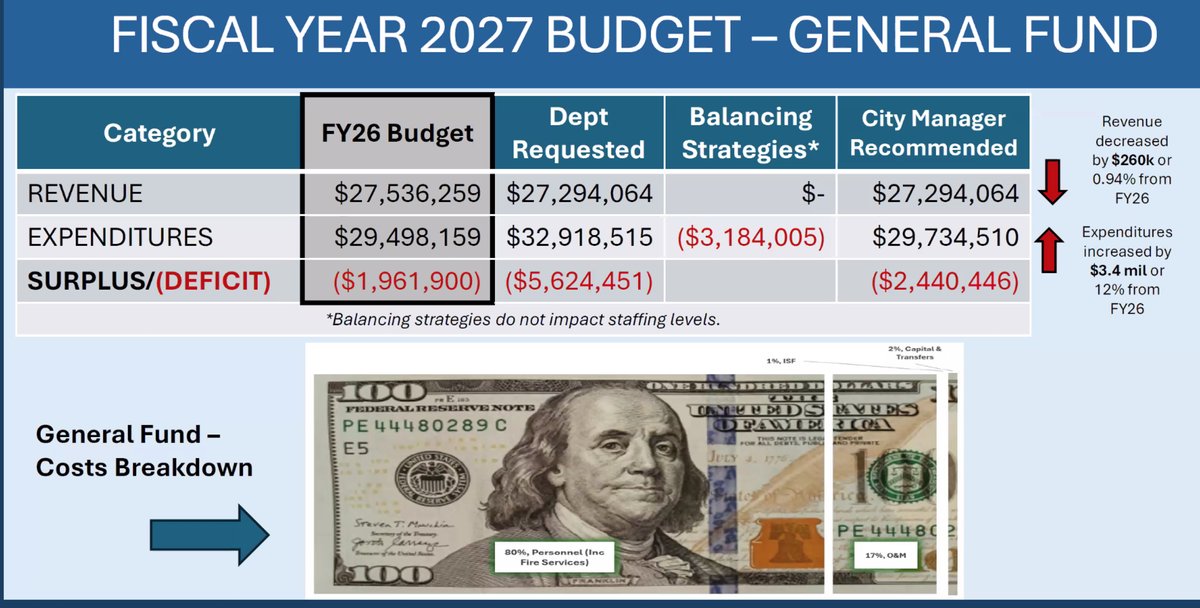
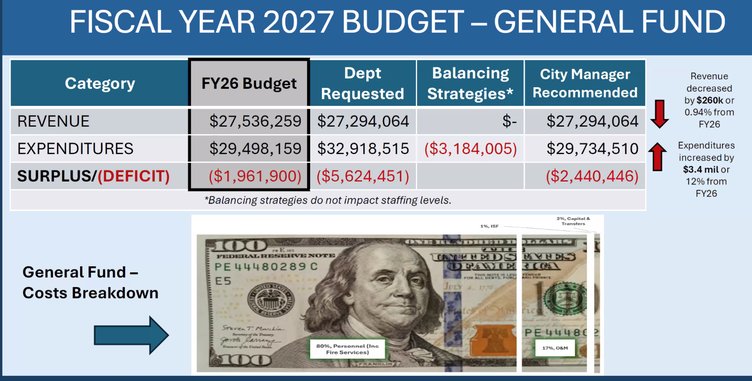
Pushing past the enterprise funds which have restricted uses, Portillo drilled down into the details about the General Fund. The city expects $27.3 million in revenues, a slight decrease of $260,000 while expenditures are projected to rise 12 percent, or $3.4 million to total about $32.9 million.
“This is mainly due to higher personnel cost, contracts and operating expenses,” said Portillo. “At this status quo level, the city is facing a projected deficit of about $5.6 million.”
To pare the deficit downward, city staff identified and implemented cost saving measures or balancing strategies. The city manager’s “status quo” recommended budget leaves the 2026-27 budget with a deficit of $2.4 million.
Mike Borges, a Ceres resident and former deputy police chief of Ceres, said he recalled that in early talks about a merger with Modesto Fire that closing fire stations was an option to lower personnel costs.
Newly appointed interim City Manager Steve Williams said he’s still in negotiations with the city of Modesto and expects to bring it to the council on June 8.
Ceres resident Shirley Rogers opined that the budget deficit is “not acceptable” and suggested the council start by eliminating health insurance for councilmembers.
Mayor Javier Lopez, who takes the insurance as does Vice Mayor Daniel Martinez and Councilwoman Rosalinda Vierra, said actual costs of premiums are $27,825, not the $100,000 previously reported.
He also questioned the necessity of relying on reserves to balance the budget. Lopez specifically wants to know if the city can save money by contracting out IT services, unfreezing police positions to curb overtime costs, and whether a Community Development director should be hired instead of a planning technician.
“My overall concern is not just where the cuts can be made, but whether we are making the right operational discussion,” said Mayor Lopez. He also said he expected that the new city manager “will hopefully come up with a great solution.”
Councilwoman Rosalinda Vierra said she also questioned if it would be cheaper to hire a Community Development director rather than contract out part-time services. She also wondered if hiring a senior mechanic would be less expensive than outsourcing services.