By Matt Rexroad
Guest Columnist
In the hallways of the California State Capitol, power is traditionally a team sport. You play by the rules, court the “third house” lobbyists to secure campaign checks, and pray the caucus leadership likes you enough to fund your campaign. It is a symbiotic ecosystem reinforced by campaign finance and political party laws passed in the 1980s and 1990s. Those laws were designed specifically to strengthen political parties, keeping them at the center of the universe. For most legislators, the party is a lifeline. Without its resources, politically targeted legislators do not survive.
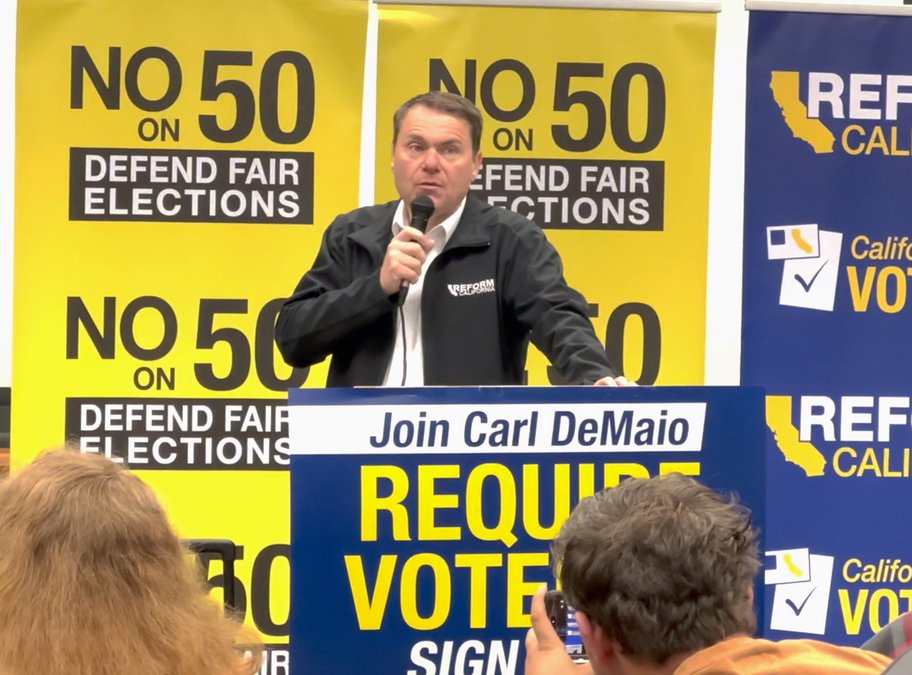
Then there is Assemblyman Carl DeMaio, R-San Diego. To say DeMaio is unlike almost everyone else in the Legislature is an understatement. He is the political equivalent of an invasive species, one that is actively reshaping the Sacramento political environment. While most freshmen lawmakers spend their first months nodding politely to committee chairs, DeMaio arrived in the 75th Assembly District seat with a prebuilt political machine that runs circles around nearly every county central committee in the state.
DeMaio does not need the establishment because he built his own. I do not really know DeMaio, and I certainly do not care for his personal style. He is abrasive, and his brand of populism often grates on those who prefer the quiet compromise of governance. However, in the world of cold, hard political mechanics, you have to admire the machine he has built. Whether you like the man or not, his fundraising operation is impressively efficient and fundamentally different. He has achieved a level of independence that his colleagues cannot enjoy because he doesn’t need anyone’s permission or resources. The secret to DeMaio’s defiance is Reform California. For years, while other politicians were wooing a handful of wealthy donors, DeMaio was building a massive, direct-response infrastructure fueled by a radio show and a sprawling email list. Through a relentless barrage of digital appeals and direct mail solicitations, he has cultivated a donor base that answers to him alone. He does not need a caucus leader to buy a television ad. He has his own megaphone, and it is louder than almost anyone else’s in the building. This independence is why the San Diego Republican establishment views him with a mixture of awe and absolute exhaustion. As a recent piece in the Voice of San Diego pointed out, there is a loud contingent of local Republicans who believe he stands in the way of a party comeback.
They see him as a “party of one” who sucks the oxygen and the money out of the room, prioritizing his own brand over the collective health of the GOP. These criticisms may be merited, as there are few, if any, examples of DeMaio materially intervening to support a candidate or measure that actually won at the ballot box. Think back to his run for the Assembly in 2024. Almost every prominent Republican in the state lined up behind his opponent. Some did it because they liked the alternative, but most did it because they simply could not stand DeMaio. In the traditional world of California politics, that kind of institutional opposition is usually a death sentence. For DeMaio, it was just another Tuesday. He did not care then, and he certainly does not care now.
The irony is that DeMaio sits in a very safe Republican seat in eastern San Diego County. He is under virtually no threat of losing it for the next decade.
But staying put is not the goal. With the passage of Proposition 50, the political landscape shifted. The long game for DeMaio is 2031. When the redistricting commission draws the next maps, DeMaio’s machine will be ready if a Republican congressional seat emerges in Eastern San Diego County. The true danger for DeMaio is the firewall. If a single state resource, staff hour, or taxpayer-funded stamp touches the Reform California apparatus, he will have a massive problem. His enemies in both parties are likely watching his office expenses with a magnifying glass, waiting for him to trip. The Legislature is built on the idea that everyone eventually needs a favor. But what do you do with a man who has his own money, his own list, and his own agenda? Carl DeMaio is the test.
— Matt Rexroad is an attorney and political consultant.