HUGHSON – News of the tragic fire that claimed 40 animals being cared for at the Stanislaus Wildlife Care Center broke many of hearts last week.
Tears flowed during a private memorial ceremony held Friday to remember and bury the animals that so many of the volunteers had grown fond of and which perished in the Wednesday evening, Nov. 18 fire.
“We buried all of the animals that died in the fire together,” read a Stanislaus Wildlife Care Center Facebook post. “Our employees and many current volunteers, as well as some past volunteers, and employees were there. I hadn’t seen some of them in 15 or more years.
“All the animals were wrapped in soft blankets. Those who had been caged together were buried next to each other. And we all cried.”
The center’s personnel and volunteers plan to plant a flower garden at the burial site in the spring.
The staff said the animals died from smoke inhalation. Among the fire’s victims were Hopper, a 30-year-old raven; Curley, an elderly barn owl; squirrels named Ariel and Boba; a rabbit named Benny, a fox, a raccoon and several doves and opossums.
Remarkably, two snakes and a turtle were recovered alive from the burned building.
Executive Director Donna Burt, who helped establish the wildlife center in 1984, was told of the fire by a neighbor who spotted flames shooting through the roof.
For Burt and her staff, the loss was especially heartbreaking because a number of the animals that perished had been longtime residents of the center, unable to be returned to the wild because of their physical limitations.
The fire broke out after employees had left the center early at approximately 4 p.m. due to a power outage. The unfortunate decision was made to bring some animals indoors to protect them from the storm only to perish inside the building when it was consumed by fire. Approximately 100 animals housed outside survived, although staff members were taking precautions to ensure that none developed respiratory problems from exposure to smoke.
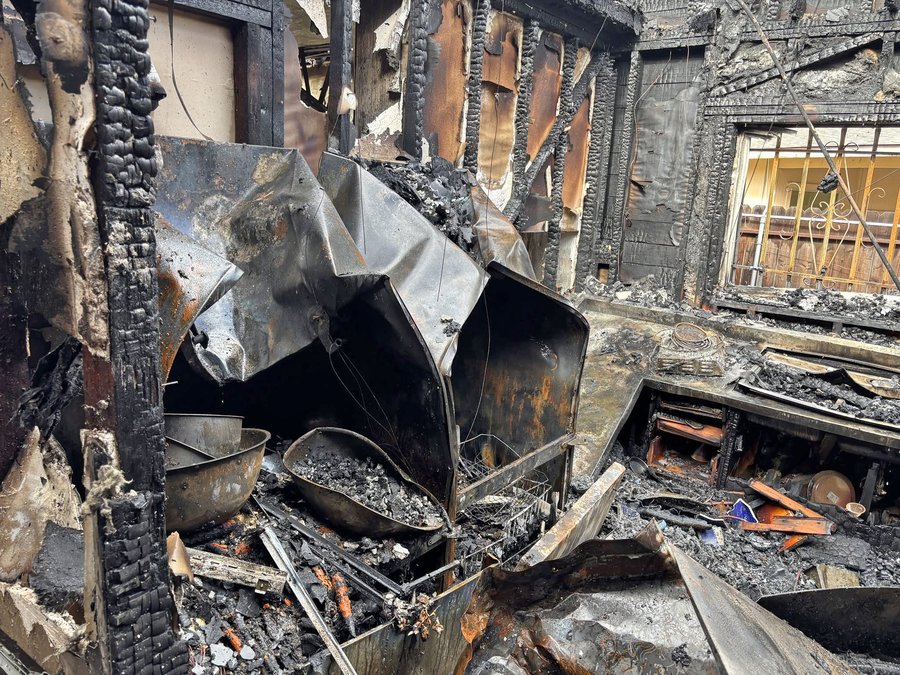
The fire that damaged the facility at Fox Grove Fishing Access off Geer Road near the Tuolumne River, which belongs to a nonprofit organization that has cared for injured and orphaned wildlife for more than four decades, may have been started by a downed electric lines caused by high winds. After the fire was reported at approximately 6:45 p.m., firefighters arrived to find flames shooting through the roof which had partially collapsed.
No employees, volunteers or firefighters were injured in the blaze.
In addition to losing its hospital and medical equipment, the center lost the kitchen where meals were prepared for the animals, as well as a substantial inventory of supplies.
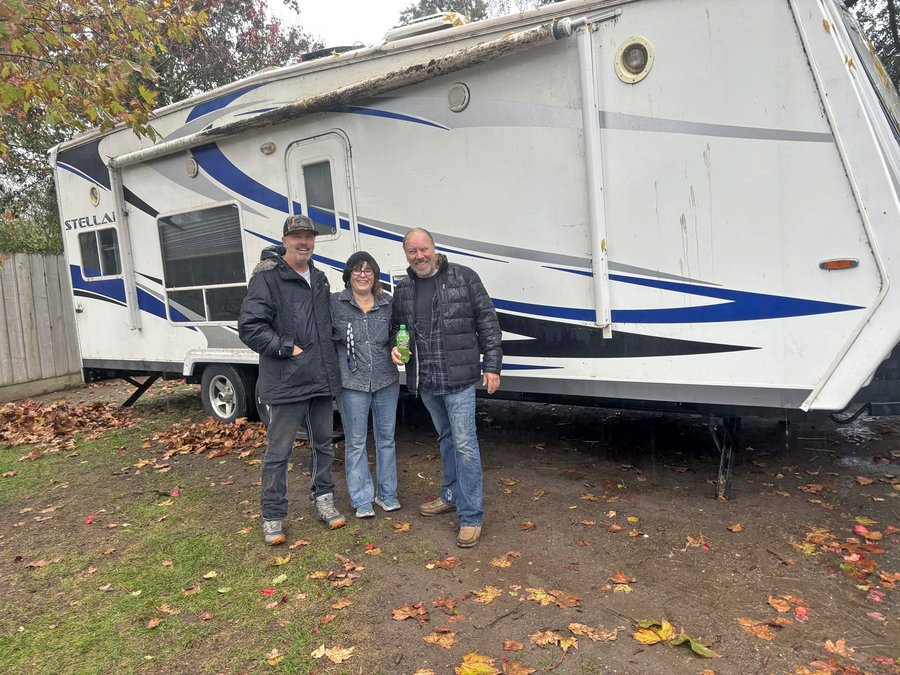
News of the tragedy has resulted in an outpouring of donations to get the center up and running again, Elaine Piini donated a travel trailer to serve as a temporary hospital. Standiford Veterinary Center and other veterinary hospitals have donated medical supplies to replace all of the medicines and supplies destroyed.
So many people have been so generous, sending in donations of money and supplies from our Amazon wish list.
Other wildlife rehabilitation centers and the California Department of Fish and Wildlife have stepped forward to assist in the care of the surviving animals.
Despite the enormous emotional and physical losses, Burt expressed determination to rebuild.
“It’s going to be months before we are up and running in a normal way again, but we will be up and running,” Burt told KCRA-TV.
“I had wanted to build a modern wildlife hospital on a different part of the property and use this building for school programs and things like that,” Burt posted on Facebook. “I am very sad that the building is gone. But we intend to replace it with a bigger and better hospital. And that will take a lot of money.”
Plans are to demolish the building with the help of a volunteer and Burt wants to build a modern building on the same site.
While the nonprofit carries insurance, officials anticipate that the cost of rebuilding and replacing specialized equipment could exceed the amount covered by its policy. Rebuilding could cost hundreds of thousands of dollars.
Despite the destruction, the center is continuing to accept injured and orphaned wildlife, although some animals may be transferred to other rehabilitation facilities until operations return to normal. Even as workers were sifting through the remains of the hospital Thursday morning, someone brought in an injured skunk for treatment.
Among the supplies being sought are paper towels, puppy training pads, liquid laundry detergent, fleece blankets, facial tissues, dishwashing gloves and Dawn dishwashing liquid.
Those wishing to contribute financially may do so through the center’s website, www.stanislauswildlife.org, or through Venmo at @StanislausWildlifeCareCenter.
Anyone who finds injured wildlife may visit https://www.stanislauswildlife.org/ until the center’s phone line is operational again at 209-883-9414.
Burt and a handful of other individuals founded the nonprofit in 1984 with little more than $300 and a desire to help injured wildlife. Over the decades, the organization grew into a regional rehabilitation facility caring for thousands of animals annually.
So far this year, the center has admitted nearly 2,600 animals.