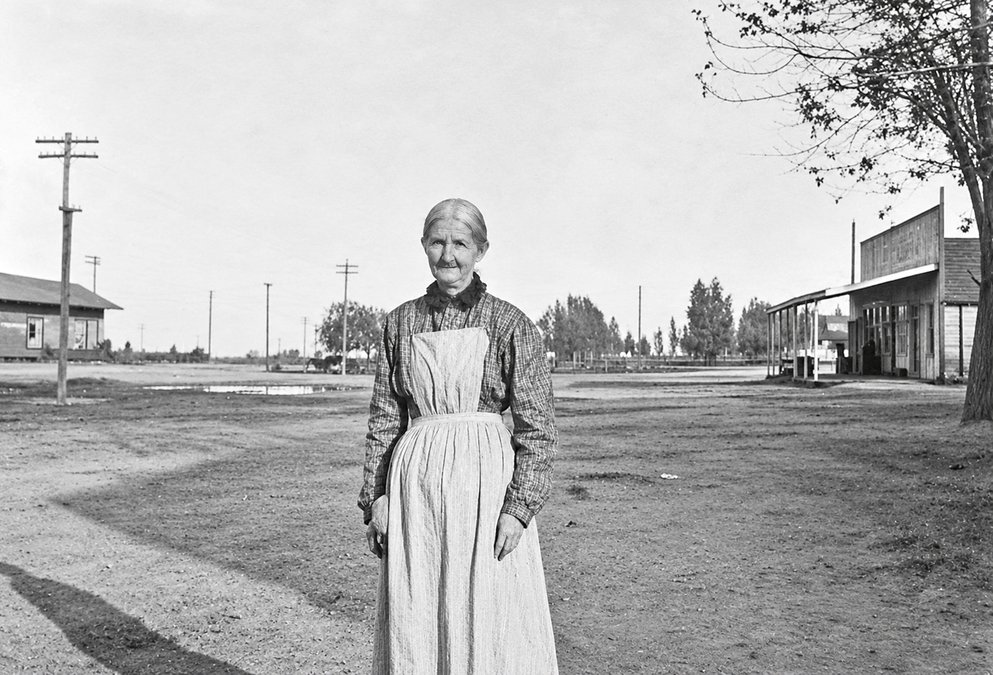
For the first 40 years of the sleepy little town of Ceres, everybody knew everybody, which is probably a axiom true of any small town in the late 19th century. But one of the most well-known of residents was Arkansas native Nancy Connor (1836 to 1918) who operated the Ceres Hotel.
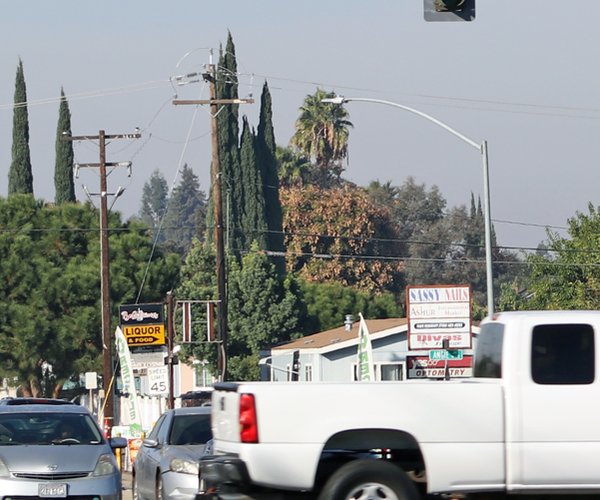
Long gone, that wooden building was situated somewhere in the vicinity of present-day Highway 99 near the Pine Street overpass.
Mrs. Connor had the help of her daughter Emma A. Connor McNeil but it was an arrangement that wouldn’t last long. Emma was born to Nancy in 1861, the year the Civil War started. No parent should have to bury a child yet that was the fate that befell Nancy when her 28-year-old married daughter passed away on December 23, 1889. The normally joyous time of Christmas was dark for the Ceres community when Nancy was lowered into the ground at the Ceres cemetery. Later a stone headstone would be installed, engraved with this verbiage: “A precious one from us has gone. A voice we loved is Stilled. A place is vacant in our home Which never can be filled.
“God in his wisdom has recalled. The boon his love had given. And though the body moulders here. The Soul is Safe in Heaven.”
A Christian, Mrs. Connor was mentioned in a 1909 Stanislaus County Weekly News article for her generosity and the donation of an organ to the Church of Christ.
Ceres was founded by Daniel Whitmore, a devoted Baptist, and his brother Richard and both were determined to keep alcohol from being served in their town which was founded around 1869. Deeds included a clause that the property was to remain alcohol free.
The temperance clause enacted by Daniel Whitmore was put to the test in 1878 when a saloon, which was a little more than a shack with a sign over the door, was set up on railroad land. Business was not good and the whiskey shop was sold to George Prather who built a hotel and bar on the site. Today the site would be approximately in the vicinity of the drainage basin near at the north side of the Pine Street overpass.
Prather brought his family to Ceres, but they were shunned by the locals, so he sold the business to Abigail Woodbridge, who later sold it to Nancy Connor for a temperance hotel. Historians, historical accounts say that Daniel Whitmore bought out Woodbridge for $5,000. Purchase Prather’s business and get rid of the bar.
As a side note, Mrs. Woodbridge would suffer a horrific death on Jan. 14, 1893 in Ceres. She was 75 and partially paralyzed when she burned to death when her clothing brushed against an open stove and ignited. Her bereaved husband, David Kennedy Woodbridge lived until 1907.
A year before her passing, the Ceres Courier interviewed her and referred to her as Aunt Nancy as she was affectionately called by most of the population.
“Folks brag on Ceres,” she said. “Don’t you know there were just three houses in Ceres when I came here 43 years ago – that house where Mrs. Kane lives now, Uncle Daniel Whitmore’s, and my little home where the Christian preacher lives now. That’s been the parsonage ever since Brother Earl McCash came here just lately. I’ve deeded it over to the trustees of the Christian church. Mr. Ward lived in Mrs. Kane’s house, and the next house to be built was where Koeffert’s Harness Shop stands now. If I remember right, that old house was torn down years ago. When I first came here, I kept house for my youngest brother David Pierson in a house 2 miles north of Ceres that isn’t there now. I’ve been a widow over 50 years, my husband William Henry Connor left this world when my daughter was eight months old; that was the first year of the Civil War back in Washington County near Fayetteville, Arkansas.
“When I came to Ceres, I often fed as many as 40 table boarders and always had one or two school girls to board. I carried water from Mr. Annear’s well over to my house for a long time till I got a well and that had two buckets. When one came up full, the other went down empty. Mr. Annear boarded with me till he built his house and sent for his English bride.
“I mind how we had no depot in those days. Uncle Daniel Whitmore used to carry the mail to the track, and the passing trains took it from him. Later, my daughter Emmaline, who was 16 years old, had charge of the post office for a year and got a salary of $100.”
In the 1917 article, Nancy Connor made reference to the celebrated train robbery of Sontag and Evans which occurred at approximately 8:20 p.m. on Sept. 3, 1891. She noted: “I do remember how I sat on the porch of this hotel with my nephew Joe McNeil when that train was held up just a little beyond where the warehouse stands now. A stranger from the city ran up to Ceres for help, and they telephoned to Stockton, and the officers came out.”
During the robbery sticks of dynamite were used in an attempt to blow open the express car filled with valuables. The robbery was thwarted when the onboard detective Len Harris opened fire and the armed robbers returned a .44-caliber bullet to his neck and fled. Harris was badly wounded but survived. He later told a reporter: “If I had had a shotgun with me I could have dropped the robbers sure.”
One of the first suspects was William “Bill” Dalton, a member of an outlaw family of brothers, two of which met their fate gunned down in the streets of Coffeyville, Kansas during a botched bank robbery. Bill Dalton underwent a preliminary trial but was released for a lack of evidence.
Historians generally agree that the robbery was committed by train robbers John Sontag and Christopher Evans. They had a livery stable in Modesto at the time. The law caught up to both and Sontag was fatally wounded at the battle of Stone Corral near Visalia while Evans was wounded and sent to prison and later released.
The Modesto Morning Herald reported this of Connor: “Ministers of the Gospel have always fared well at her hands, and she never regrets what she has been able to do for anyone in need. From a grain field she has watched this community grow to a dairy, and now a fruit producing country. Instead of feeding harvesters of wheat, in late years she has fed peach and grape pickers by the hundreds. Her years have been many, and who can show more useful ones?”
Records show that in November of 1915 that Nancy Connor gifted a lot in town to a Sarah McNeil.
Mrs. Connor died at age 81. Nancy and daughter are side by side in the Ceres Memorial Park, a cemetery that vibrates with every passing rail car and the dead sleep under the din of perpetual freeway noise. Interestingly, the spelling of the Connor name has confused many. Nancy’s marker is spelled Connor while the cement border around the family grave plot is spelled Conner.
Nancy’s mother, Mary Pearson (1804-1871) is buried miles away in Lakewood Memorial Park in Hughson.