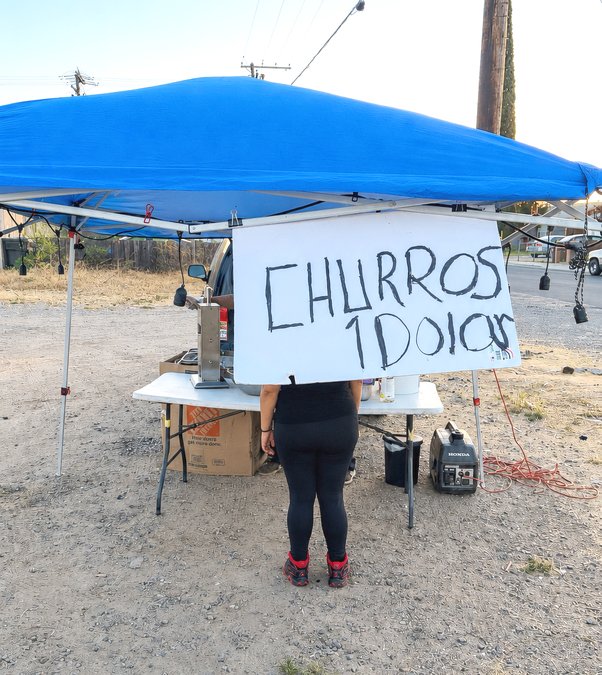
Stanislaus County supervisors approved the creation of a new task force last week aimed at addressing the growing number of food vendors operating without permits. The proposal was approved at the June 23 meeting.
The interagency task force will bring together the county’s Department of Environmental Resources (DER), Sheriff’s Office, District Attorney’s Office, and participating city governments. The effort would begin as a pilot program focused on both education and enforcement.
County officials say many unpermitted vendors — including food trucks, hot dog carts, and other mobile food operations — prepare and sell food without meeting required health and safety standards. According to DER, these businesses often fail to follow proper food handling procedures, temperature controls and sanitation requirements.
The proposed program would initially emphasize education, helping vendors understand the county’s permitting process and encouraging compliance. However, businesses that continue operating without permits after receiving guidance could face coordinated enforcement actions.
Two inspections would take place after education and on the third inspection the equipment can be impounded and held 30 days if they are still without a permit, said DER Director Robert Kostlivy.
“This education first component just hasn’t been working,” said Kostlivy, “and we’re actually at the point now … we’ve pretty much hit everyone so now they’re on their third strike and so it’s impounding almost immediately.”
The task force’s responsibilities would extend beyond mobile food vendors to include catering operations, temporary food facilities, commissaries, and sidewalk vendors. County officials argue that unpermitted businesses create an uneven playing field for operators who comply with regulations and pay required fees.
Under California law, food vendors must obtain permits from the county Department of Environmental Resources and submit to routine food safety inspections. In Stanislaus County, annual permit fees range from $300 to $450 for fruit carts, tamale carts and ice cream vendors, while food trucks and trailers pay approximately $600 per year.
In a report prepared for the Board of Supervisors, Kostlivy stated that previous efforts to educate unpermitted vendors have not produced significant compliance and that violations continue to occur regularly. Representatives from Ceres, Modesto, Turlock, and other local jurisdictions have expressed support for the proposed task force.
“This education first component just hasn’t been working,” said Kostlivy, “and we’re actually at the point now … we’ve pretty much hit everyone so now they’re on their third strike and so it’s impounding almost immediately.”
Officials say coordinated enforcement would prevent vendors cited in one city from simply relocating to another jurisdiction. The county would oversee enforcement in unincorporated areas and manage administrative duties related to citations, fines, and penalties. Each cities would address violations within their own boundaries while working closely with county agencies.
The Sheriff’s Office would assist with enforcement efforts, including detentions when necessary, while the District Attorney’s Office could pursue legal action against businesses that repeatedly refuse to comply with regulations.
Although many food vendor permit violations have been decriminalized in California, some health code violations can still be prosecuted as misdemeanors, carrying penalties ranging from $25 to $1,000 in fines and up to six months in jail.
County officials report that they do not currently have data linking food-borne illnesses directly to unpermitted vendors. However, Kostlivy noted that his department has received increasing complaints involving illness, unsanitary conditions, and customer dissatisfaction connected to unlicensed food operations.
Under the proposal, counties and cities would also be responsible for storing confiscated food preparation equipment. Vendors would be required to pay any fines and storage fees before seized equipment could be returned.
The task force would continue to prioritize voluntary compliance before escalating to enforcement. Coordinated action would be reserved primarily for repeat offenders.
The proposal follows recent enforcement efforts in Ceres. In February, the Ceres Police Department’s Code Enforcement Unit partnered with DER to conduct an operation targeting unlicensed food vendors. Two vendors were cited, and authorities confiscated food products and cooking equipment.
Officials said the operation was launched in response to complaints from residents and city leaders. According to a city news release, unlicensed food vending can present significant health and safety risks because the food is not subject to established inspection, sanitation, or quality-control standards.
The plan is to return to supervisors in September or October with an implementation plan. One supervisor will be appointed to the task force.
Because DER staff is limited, he expects that city staffers will be able to do their own environmental inspections on their own.
Kostlivy gave a word picture of how pop-up vendors often result in crowds alongside road presenting unsafe conditions, with customers parking dangerously close to traffic. He said while many believe they are helping folks trying to get ahead but he suggested that many may not be “mom and pop businesses” but “part of a larger coordinated network operating outside of the regulatory system.” He also stated many buying vendor food believe the food is tested and safe but often is not.
Kostlivy showed photos of past enforcement seizures, including el pastor pork on a spit hanging from inside a van and touching the walls of the vehicle. He said many vendors have no hand washing facilities and restrooms and are “there for several hours and prepare food.”
Another photo taken at 4030 Central Avenue showed a bucket containing a “putrid” substance.
Another illustration showed a chicken sitting on top of corn “adding a little extra to it.”
Stanislaus County District Attorney Jeff Laguero said many involved in roadside vending are the result of human trafficking exploitation. He said the task force’s contacts provide a chance to identify labor trafficking victims, child labor violations, wage theft and fraudulent business activities.
A news channel video was shown which detailed how Merced County kingpins were setting up roadside food vendors who weren’t paid minimum wage while making $180,000 per month.
Setting up the task force will require about $218,542 in General Fund costs with $133,215 to Environmental Health and $51,396 to the Sheriff’s Department.
“We need to have enforcement measures in place but I believe education and compliance should be the core of this,” said District 5 Supervisor Channce Condit, who noted his district may be the most impacted. “I think success will be measured of how many vendors we get into compliance.”
Condit said he didn’t want to see the task force “turn into an anti-street vendor policy” while protecting the public’s health.
He suggested greater compliance may come through the help of community leaders, citing groups like South Modesto Businesses United, West Modesto Community Collaborative, Latino Chamber of Commerce and Latino Community Roundtable. Condit wanted to see at least two members from those organizations in the task force.
“For me this is a long time coming,” said Supervisor Terry Withrow. “It’s not the moms and pops – we’re not going after the moms and pops. What just turns my stomach over this … is the human trafficking aspect to this. It just blows me away that we look the other way for this to happen and that’s what we’ve been doing, that’s what everyone’s been doing.”
He said advocates who do business with vendors are helping to enslave people. Withrow said cartels are making more money with roadside vendors than they are selling drugs.
“This is pathetic that this is going on.”
Condit said he wants to see data about the degree of cartel involvement otherwise “we’re just speculating.”
Supervisor Buck Condit, whose District 1 covers Oakdale and Riverbank, said he routinely gets complaints over roadside vendors, some from brick and mortar businesses who are following the rules.
“This is like a trifecta of issues that this task force is going to have to deal with,” said Buck Condit, “not only the food safety, the roadway safety, fairness of business, labor exploitation, although we’re not going to be enforcing those, it’s like the lynchpin to start the investigation for all those things. I’m supporting this.”
He noted how the same vendor sets up in the construction zone of the North County Corridor project only return night after night after being busted.