The city of Ceres is crafting a parks master plan to improve existing parks and develop new ones and last week the Ceres City Council received a cursory lesson about those needs.
Public Works Superintendent Josh Casas noted that the master plan has not yet been formally adopted by the council because the required environmental review has not yet been completed. The master plan looks at Ceres’ existing park system, community needs, park conditions, future development, community, opportunities, and long-term maintenance and funding challenges.
Casas noted that Ceres has 14 existing parks covering approximately 162 acres. The city also has approximately 12.6 acres of planned parkland, along with another 52 acres that have been identified through future specific plans.
“One of the things the research identifies is that we do have service gaps, particularly in central and southwest southwestern Ceres,” said Casas. “The southwest area also has a need for additional formal sports fields.
While the Ceres General Plan calls for a parkland ratio goal of 4 acres of parkland per 1,000 residents, the master plan’s baseline identifies approximately 3.55 acres per 1,000 residents with existing park land.
Casas said the city heard from residents that they value cleanliness, proximity and maintenance.
“Generally the newer parks tend to have newer amenities and fewer deferred replacement needs. That does highlight an important challenge as our older parks continue to age. There are also recurring concerns that come up across the system, things like safety, lighting, restroom availability, cleanliness, aging equipment, irrigation, and long-term maintenance.”
A survey of residents notes the community wants to see more basketball, tennis, soccer, pickleball courts, and baseball fields.
He noted that the largest parks, Ceres River Bluff Regional Park and Smyrna Park, require a significant amount of ongoing maintenance.
“As you guys saw earlier this year when we deferred some of the contracted work, the complaints arose very quickly and the work piled up very quickly and became too much for the staff to handle on their own,” said Casas. “The longer term priorities identified include irrigation, ADA improvements, restrooms, trails, expanded trails, lighting, and security, and ultimately to continue the regional buildout.”
The city recently made recent significant improvements to the 28-acre Smyrna Park, including improvements to the restrooms, the picnic and rental areas, shade, parking, and lighting.
A pressing need that is before the council is deciding how to fix vandalized playground equipment at Independence Park.
At Ceres’ newest park, Guillermo Ochoa Park, Casas said the city will need to address “some of the watering issues and the landscape issues there.”
The city opened the park in 2014 and after spending $2 million to install a sprinkler system and new sod, began experiencing dead grass issues.
Needs are pressing to improve the worn-out Roeding Heights Park which is now used for youth football practices.
Strawberry Fields Park also serves both sports and neighborhood recreation with ongoing needs around the fields, the irrigation, playgrounds, and the general comfort improvements.
Marie Neal Park near Sam Vaughn Elementary School provides a dog park and recreation opportunities so the city sees potential targeted improvements including pathways, lighting, shade, and accessibility.
Casas outlined the needs at other parks as follows:
Whitmore Park –Accessibility, lighting, landscaping, and maintaining its ability to function as an event and gathering space.
Berry Grove Park – Shade structures, playground, lifecycle replacement, paths, irrigation, and pedestrian access.
Don Pedro Park – Shade, lighting, ADA access, playground, and play equipment, turf, and irrigation.
Persephone Park – Shade, lighting ADA connections, and eventually play equipment replacement.
Redwood Park – Keeping the basic playground equipment safe, and adding lighting, shade, and accessibility.
Riverview Park – Playground, lighting, and security, ADA routes, shade, and irrigation.
Sam Ryno Park – Focus on lighting, irrigation, path transitions, playground, lifecycle replacement, and turf condition.
“Lifecycle planning is important. Not every need is an emergency today, but every one of these assets eventually reaches the point where replacement or major rehabilitation is necessary. If we don’t plan for those costs over time, we eventually end up responding to failures rather than managing them proactively.”
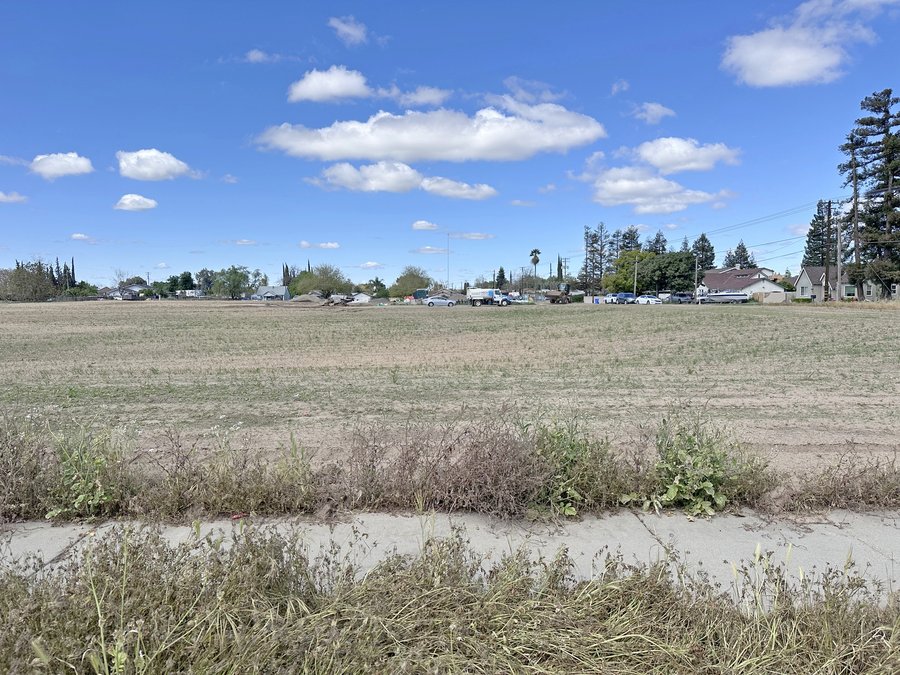
Lions Park, an underdeveloped 10-acre park site on River has a conceptual plan that needs to be updated. The city wants to see trails, a natural play area, courts, shade, and other neighborhood and community amenities.
Beyond Lions Park, there’s approximately 52 acres of proposed future parks associated with the different specific plans. West Landing includes a proposed 30-acre community park and 285-acre neighborhood park.
The Whitmore Ranch subdivision in east Ceres yet to develop includes a proposed 5.2-acre neighborhood park.
“These future opportunities depend on the growth, the financing, and project approvals. So as we look at these opportunities, we need to keep the questions in the front of our mind. Where does the community have a demonstrated need for additional park facilities? And what is the city’s long-term ability to fund and maintain these facilities once they’re built?”
Figuring out how to pay for the parks and their maintenance looms as Ceres’ biggest challenge, he said.
“Most importantly we need to identify both the capital funding to build the park and the ongoing funding to operate and maintain it. The planning level cost ranges just depending on the size of the park – I don’t know how accurate these numbers are because this is coming from our master plan – but $3 million to $6 million for a neighborhood park, $5 million to $12 million for a community park, and $8 million to $20 million or more for a major regional (park) expansion.”
There are monies that can be tapped into, including development impact fees, Community Facility Districts (CFDs), parkland dedication or in-lieu fees, capital reserves, general fund and state and federal grant funds.
Casas suggests the city plan to make investments in stages, concentrating first on the most pressing needs while focusing on obtaining funds for projects that have stalled for lack of money, such as Lions Park.
Ceres resident Dave Pratt said the city appeared to be looking at a wish list but noted how existing parks are destroyed by vandals, specifically how trees at Neal Park have been damaged weeks after planting.