
By Sean Cleary
Guest Columnist
Holding a driver’s license comes with a basic responsibility: not becoming a danger to the community of which you are part. Yet every year, we continue to see around 40,000 lives lost on American roads — in crashes caused by speeding, alcohol, distraction or drivers who get behind the wheel in poor physical condition. These are not matters of bad luck. In many cases, they are the result of a chain of events set in motion by a driver’s choices. The outcome may be tragic, but the causes are often clear — and preventable.
What is more troubling is how these cases are treated once they reach the legal system. In practice, accountability does not always reflect the full errors committed in the driver’s actions. If the exact trigger cannot be fully proven, the consequences may be limited to a citation, even when the outcome is severe. That gap — between harm and accountability — is one that can no longer be ignored.
Alcohol and drug use remain some of the most investigated causes of road accidents. But looking at recent data from California, they account for only a portion of the problem. In 2023, DUI-related crashes made up about 11.5 percent of all reported incidents, with alcohol alone accounting for roughly 10.9 percent.
The same trend shows up locally. In Stanislaus County, in the last six years, DUI-related crashes hovered around 13.5 percent of all incidents. When you look only at alcohol, the average is slightly lower, at about 12.6 percent. These types of impairment are easier to identify, which is why the law treats them more clearly. In California, it is illegal to drive with a blood alcohol concentration of 0.08 percent or higher, and for drivers under 21, even a 0.01 percent BAC can lead to penalties.
Once those limits are crossed, the consequences tend to follow a predictable path. A driver can be stopped, tested and charged on the spot. A conviction can lead to license suspension or revocation, mandatory programs, fines, and even jail time, depending on the severity of the case and whether others were injured.
Risky behavior is shaped by more than alcohol or drugs. In California, drivers are prohibited from holding or using a handheld phone while driving, and even hands-free use is restricted for those under 18. Using a handheld phone while driving can result in a fine — typically around $20 for a first offense, and $50 for each repeated violation.
Still, distraction remains difficult to address in practice. A driver can look down at a screen for just a few seconds — long enough to miss a stop, drift out of a lane, or fail to react in time — without leaving clear evidence behind. Enforcement depends on what an officer can directly observe or what can be proven after the fact. Unless the behavior is witnessed or recorded, it is rarely documented in the same way as alcohol impairment. As a result, even when distraction plays a role in a crash, it is often harder to establish — and less likely to shape the legal outcome.
Reckless driving should not be treated lightly just because it is harder to prove. When someone speeds, looks at their phone, or drives while exhausted, they are making a choice that puts others at risk. These are not accidents in the usual sense — they are the result of decisions made behind the wheel.
The problem is what happens after. If there is no clear evidence — like alcohol in the system — the consequences are not criminal. But in many cases, it’s still possible to understand what happened. Phone records can show if a driver was using a device, cameras nearby may capture parts of the moments leading up to the crash, and witnesses or vehicle data can help fill in the gaps. None of these alone may tell the full story, but brought together, they are sufficient to bring to light the true sequence of events.
If a crash leads to serious injury or death, the response should reflect the outcome — and take into account all available evidence, not just what is easiest to measure. Drivers who act recklessly should face criminal charges, even when there is no proof of intoxication. Those who repeatedly put others at risk should lose their licenses, not just pay fines.
There should also be steps to prevent a similar behavior from reappearing. Requiring drivers to complete retraining after serious violations can help change habits, not just punish them. And for victims and their families, the legal system should make it possible to seek full compensation without unnecessary barriers related to evidence.
Any unsafe behavior behind the wheel puts others at risk. When that behavior leads to serious harm, the response should reflect what happened, not just what can be proven. Without that change, the same kinds of losses will continue to happen.
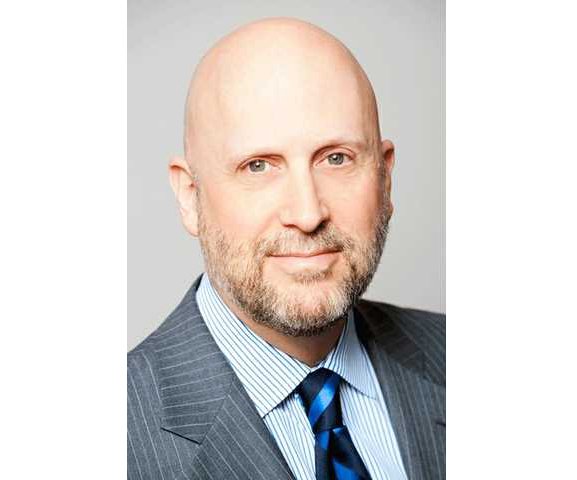
— Sean M. Cleary is an attorney based in Miami and the founder of the Law Offices of Sean M. Cleary P.A., representing individuals injured in accidents, including cases involving impaired driving.