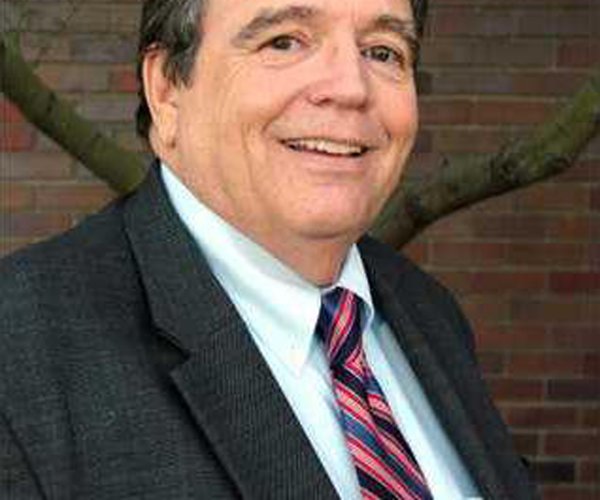

By Tom McCune
Guest Columnist
The debate about direct democracy versus representative democracy goes back many years. Our founders selected representative democracy when they wrote the Constitution in 1787.
But recently, it seems that the pendulum may be swinging more in the direction of direct democracy, judging by the number of ballot measures that keep cropping up. The November 2026 ballot may have up to 14 statewide ballot measures plus more local measures. Even worse, some of the state measures appear to be “poison pill” measures designed to impair other measures.
When you add the local measures and candidates for smaller offices such as harbor commissioner, hospital commissioner (for a district that doesn’t have a hospital), water district, etc. many voters either just don’t vote or leave most of the ballot blank.
It does raise the question of how much direct democracy should we really have. The good news is that voters today have access to much more information than they did in 1787 when newspapers were the only medium available. Now, you can spend all day cruising political and news websites if you really want to. But too many of those sites are propaganda pieces instead of the objective information that voters need to make informed decisions.
I don’t know what to do about the ever-expanding plethora of ballot measures other than to encourage voters to really study the issues in detail. The names given to the propositions are often misleading or emotionally charged (or both) so don’t just look at the name of the measure and check one of the boxes. If you have studied the language of a ballot measure in detail and consulted sources you trust for recommendations, but still don’t really understand the measure, you should probably vote against it. Measures shouldn’t be on the ballot if they are that convoluted.
Here is an oversimplified list of possible state ballot measures in 2026.
Proposition 1 (Veterans and Affordable Housing Bond). It proposes an $11.2 billion general obligation state housing construction bond.
Proposition 2 (Save for California’s Future Act). It revises formulas for contributions into the state’s rainy-day fund.
Proposition 3 (California Children’s Education and Health Care Protection Act). It extends special tax rates for high income individuals and dedicates some of the money to schools and community colleges.
Proposition 4 (California Fair Elections Act). It repeals the existing prohibition in the Political Reform Act of 1974 against public funding of campaigns and authorizes state and local entities to allocate public funds to candidates in some situations.
Proposition 5 (Recall of State Officers). It makes several changes in the process for recall of state officers.
Proposition 37 (California Middle-Class Homeownership and Family Home Construction Act). It authorizes the California Housing Finance Agency to issue up to $25 billion in revenue bonds to offer second mortgages.
Proposition 38 (California Immunology Research and Cures Initiative). It authorizes a $8.4 billion state general obligation bond for immunology and immunotherapy research.
Proposition 39 (California Voter ID Initiative). It requires voters to present government-issued identification at the polls or the last four digits of a government-issued identification number when voting by mail.
Proposition 45 (Building an Affordable California Act). It proposes a new chapter of the California Environmental Quality Act to expedite permitting for a wide range of “essential projects.”
Proposition 40 (Billionaire Tax Act). It imposes a new 5% tax on California residents with over $1 billion in personal wealth.
Proposition 41 (Improving Transparency, Effectiveness, and Efficiency in California Government Act). It prohibits any new state taxes that exclude their revenue from existing voter-approved state spending limits. Some observers think this is a “poison pill” designed to impair the Billionaire Tax Act.
Proposition 42 (Retirement and Personal Savings Protection Act). It prohibits any new state tax on the ownership of personal property. This might be another “poison pill” designed to impair the Billionaire Tax Act.
Proposition 43 (Local Special Taxes). It prohibits local governments from enacting special taxes unless approved by two-thirds of local voters.
Proposition 44 (Clinic Funding Accountability and Transparency Act). It requires nonprofit health clinics to spend at least 90% of their revenue on programs related to their charitable purpose.
So, start doing your homework and be ready to vote your conscience.
— Tom McCune is a member of the Belmont City Council, but opinions are his own.